


A Legacy of Innovation
For more than fifty years, the Emory Division of Plastic and Reconstructive Surgery has been at the forefront of the specialty. The program has trained over 150 plastic surgeons, produced more than 15 division chiefs, and its faculty and trainees have authored multiple seminal textbooks and innumerable manuscripts. In a national survey of plastic surgery leaders, several Emory alumni were recognized among the field’s most influential innovators of the twentieth century.¹
1. Hultman CS, Friedstat JS. "The ACAPS and SESPRS surveys to identify the most influential innovators and innovations in plastic surgery: No line on the horizon." Ann Plast Surg. 2014;72(6):S202-7.
The Founding Era: Dr. Maurice Jurkiewicz (1971–1992)
The division was established in 1971 when Emory’s Department of Surgery chairman, W. Dean Warren, recruited Maurice J. Jurkiewicz from the University of Florida to serve as the inaugural chief of plastic surgery. Remarkably, both men would go on to serve as president of the American College of Surgeons — a distinction that speaks to the caliber of leadership that defined Emory’s surgical programs from the start. Dr. Jurkiewicz — known affectionately as “Dr. J” — also served as president of the American Association of Plastic Surgeons and chairman of the Board of Directors of the American Board of Plastic Surgery.
Over twenty-two years as chief, Dr. Jurkiewicz cultivated a strong sense of collegiality and a nurturing yet rigorous educational environment that has permeated the division’s culture ever since. He was widely regarded as a powerful role model and inspirational teacher with an exceptional ability to identify and develop young talent. Two of his early protégés, Drs. Stephen Mathes and Foad Nahai, created the groundbreaking classification system for musculocutaneous flaps at Emory and published their definitive textbook, Clinical Atlas of Muscle and Musculocutaneous Flaps, in 1979 — a work that became the foundation for modern reconstructive surgery. Five of Dr. Jurkiewicz’s first twenty-nine residents went on to assume division chief positions at other institutions, spreading the Emory educational model nationwide.
In 2016, Dr. Nahai was named the first Maurice J. Jurkiewicz Chair in Plastic Surgery, an endowed position established through alumni contributions and a gift from Dr. Jurkiewicz’s estate — a lasting tribute to the division’s founder and the generations he inspired.
Building a Powerhouse: Dr. John Bostwick (1992–2001)
Dr. John Bostwick succeeded Dr. Jurkiewicz as chief and continued to grow the division into one of the premier academic plastic surgery programs in the nation. He led with a genuine and caring personality as well as an eye toward innovation. A pioneer in the use of the latissimus flap and in immediate reconstruction for the treatment of breast cancer, Dr. Bostwick became widely recognized for his contributions to breast surgery and authored the formative textbook Plastic and Reconstructive Breast Surgery in 1990. In 1995, he co-authored Endoscopic Plastic Surgery with Drs. Nahai and Felmont Eaves — the first book of its kind to describe this burgeoning field. Under his leadership, Emory was central to the early development of endoscopy in both reconstructive and aesthetic surgery.
The Aesthetic Vision: Dr. T. Roderick Hester (2002–2009)
Dr. T. Roderick Hester brought a focus on aesthetic surgery to the division. He and Dr. Nahai had established Paces Plastic Surgery — a thriving aesthetic practice and top-tier fellowship training program that had long provided clinical rotations for Emory residents. When Dr. Hester returned to Emory to serve as division chief, Paces joined Emory Healthcare and became the Emory Aesthetic Center, which remains the primary setting where residents gain dedicated experience in aesthetic treatments. Dr. Nahai’s contributions during this era further solidified Emory’s reputation in aesthetic surgery, culminating in his widely referenced textbook, The Art of Aesthetic Surgery: Principles and Techniques.
Advancing Breast Reconstruction: Dr. Grant Carlson (2010–2024)
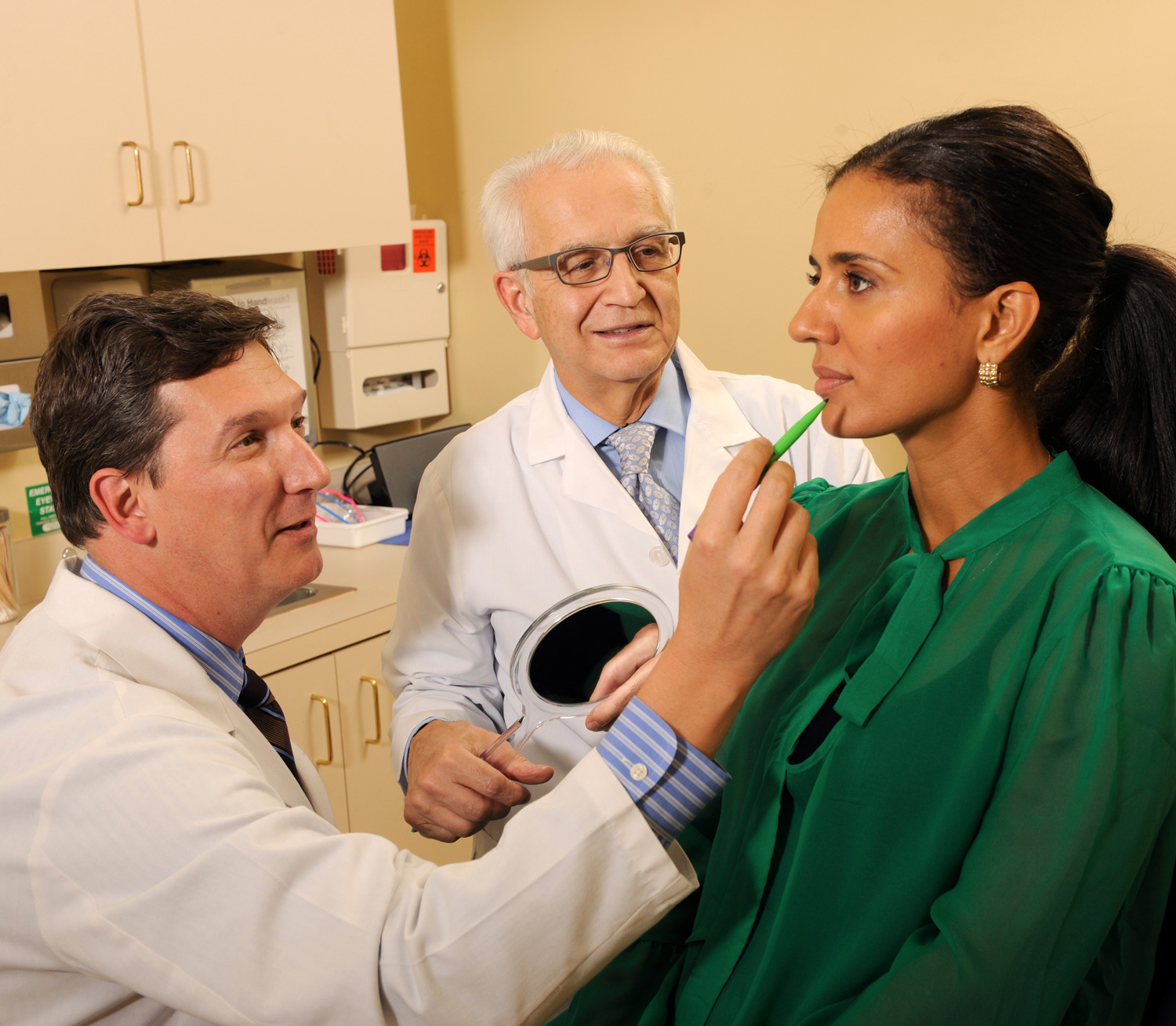
Dr. Grant Carlson expanded the division during his fourteen-year tenure as chief. His dual expertise in plastic surgery and surgical oncology allowed Emory to continue as a leader in reconstructive breast surgery, building on the division’s legacy with important refinements to skin-sparing and nipple-sparing mastectomy techniques. Alongside Dr. Carlson, Dr. Albert Losken and surgical oncologist Dr. Toncred Styblo led pioneering multidisciplinary work in oncoplastic breast-conserving therapy — an approach that combined cancer surgery with reconstructive techniques and has since become a standard of care worldwide. Dr. Losken authored multiple textbooks on the subject, including New Techniques in Partial Breast Reconstruction: The Oncoplastic Approach.
Together, Drs. Carlson and Losken founded the integrated plastic surgery residency program in 2015, adding a six-year training track that now provides the most diverse and comprehensive clinical experience in the program’s history.
The Division Today: Dr. Albert Losken
After serving as residency program director for over twenty years, Dr. Albert Losken was appointed chief of the division in 2024. Now the Maurice J. Jurkiewicz Professor of Surgery, Dr. Losken has maintained resident education as one of the division’s foremost priorities. With Dr. Paul Ghareeb, who succeeded him as program director, he has expanded the integrated program to three residents per year.
With strong, stable leadership across more than five decades, the Emory Division of Plastic and Reconstructive Surgery is well positioned to build on its tradition of excellence. We invite you to learn more about our program, meet our faculty and residents, and consider joining the Emory family as we continue to shape the future of plastic surgery.