


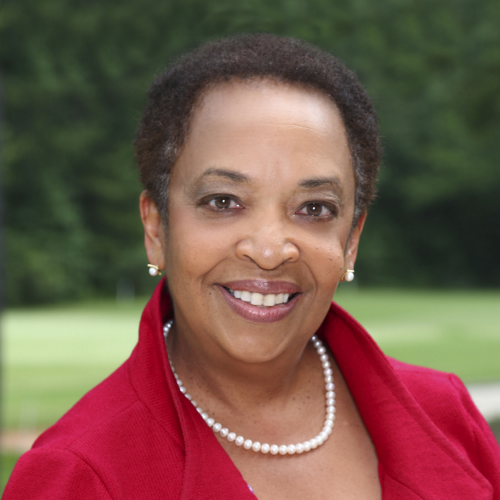
Dr. Eve Higginbotham, nationally recognized ophthalmologist and medical school administrator, has built a career marked by leadership in medicine, higher education, and inclusive excellence.
Born in New Orleans to parents who were public school teachers, Higginbotham earned undergraduate and master’s degrees in chemical engineering from the Massachusetts Institute of Technology. She graduated from Harvard Medical School in 1979.
She completed an internship in San Francisco, an ophthalmology residency at Louisiana State University and a glaucoma fellowship at Harvard.
In 1994, Higginbotham was named chair of the Department of Ophthalmology at the University of Maryland School of Medicine in Baltimore. She later served as dean and senior vice president for academic affairs at Morehouse School of Medicine in Atlanta, and as senior vice president and executive dean for health sciences at Howard University. In 2013, she was appointed vice dean for inclusion, diversity, and equity at the Perelman School of Medicine at the University of Pennsylvania.
Higginbotham was elected to the Institute of Medicine in 2000 and named a fellow of the American Academy of Arts and Sciences in 2009. In 2010, she was appointed to a four-year term on the National Board of Medical Examiners, the organization responsible for overseeing the U.S. medical licensing examination. She served several boards and councils including the Harvard Board of Overseers, MIT Corporation, the National Research Council of the National Academies of Science, Engineering, and Medicine, the National Academy of Medicine Council, American Academy of Ophthalmology, Research to Prevent Blindness Advisory Board, and American Glaucoma Society.
Dr. Higginbotham has rejoined Emory as of July 1 as a physician and member of faculty. Her work continues to influence future generations of medical professionals committed to leadership and inclusive excellence in health care.
Q&A with Dr. Higginbotham
1. You were raised by two public school teachers in New Orleans. How did your upbringing influence your path into medicine and education?
As one of three daughters of educators, it was clear from the very beginning of my life that college and even beyond college, a career was expected. Of course, it was a given that we should follow our passion and create a career path that aligns with our core values, talent, and interests. My work ethic which provided the basis for achieving intended goals was engrained in me from the beginning of my childhood, always involved in extracurricular educational experiences during the evenings and summers.
2. What inspired you to pursue chemical engineering at MIT, and how did that shape your approach to medicine?
After becoming deeply embedded int the MIT culture, it was clear that the mantra of “mens et manus” aligned with my interests of using theory to apply to science of solving problems observed in the world. Chemical engineering was an accessible path to that intention, given my love for chemistry which brought me to MIT in the first place. I believe my engineering background provided an important means to thinking logically about solving problems in medicine.
3. What drew you specifically to ophthalmology—and later, to focus on glaucoma?
At the time that I was making a choice in careers, ophthalmology rose to the top of my list of options. It was a field that was highly technical and there were immediate benefits which may benefit experienced by patients clinically. Glaucoma, in particular was, and continues to be one of the areas of ophthalmology that has many research questions unanswered. This subspecialty also nicely aligned with my interests in ophthalmology, fluid dynamics and polymer science.
4. What do you look forward to most as you rejoin the faculty at Emory Eye Center?
I have always enjoyed seeing patients and teaching and thus, I look forward to working with residents and medical students in particular. I especially look forward to engaging with faculty and collaborating on research.