


Mark Lyle Awarded NIH Grant to Advance Stroke Rehabilitation

Mark Lyle, Assistant Professor in the Division of Physical Therapy, has been awarded a $3 million grant from the National Institutes of Health to investigate the underlying causes of motor impairment following a stroke. Despite advances in rehabilitation, many stroke survivors continue to experience muscle weakness, impaired coordination, slower walking speeds and an increased risk of falls. Lyle’s research seeks to demonstrate reflexes in the lower limb that coordinate thigh and ankle muscles are altered after a stroke and contribute to these persistent movement challenges. By identifying which lower limb reflexes are altered and how they contribute to motor impairment, Lyle’s team will lay the groundwork for precision neuromodulation strategies to correct abnormal reflex modulation, restore walking and balance ability and significantly improve the quality of life for stroke survivors.
DPT Faculty Michael Borich and Mark Lyle Recognized by the Emory SOM for Outstanding Research
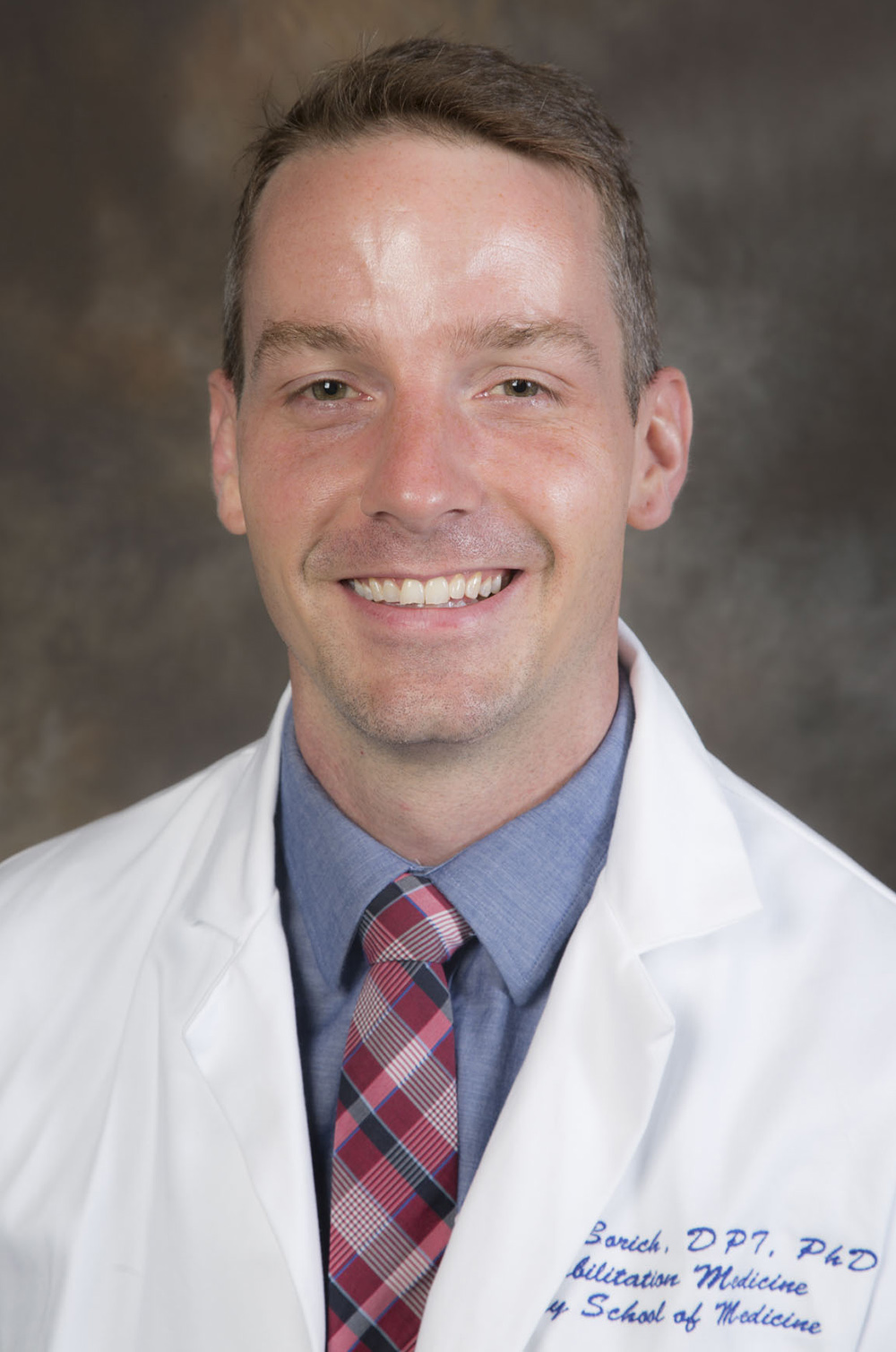
Michael R. Borich, PT, DPT, PhD
Michael R. Borich’s research focuses primarily on stroke recovery, neural plasticity, motor learning and balance control. His work uses advanced neuroimaging, neurophysiological and neuromodulation techniques to understand how the brain reorganizes after neurological injury and how rehabilitation can optimize recovery. He has made significant contributions to understanding brain connectivity, sensorimotor integration and cortical control of movement after stroke, to develop interventions that enhance recovery and mobility in individuals with neurological disorders. This work has the potential to improve mobility, functional independence and quality of life for individuals living with neurological injuries.
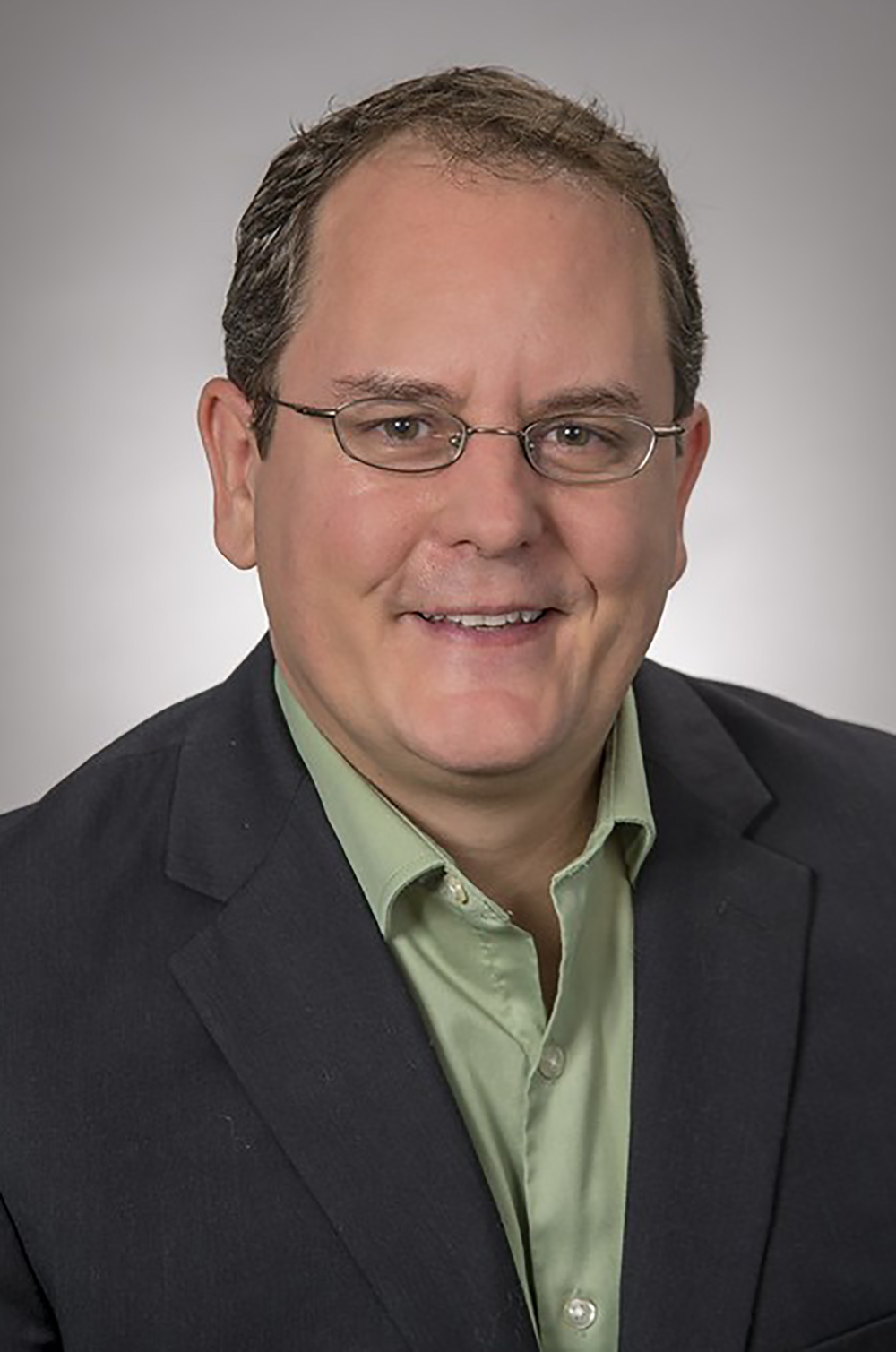
Mark A. Lyle, PT, PhD
Mark Lyle studies the functional role of proprioceptive feedback from muscle spindle and Golgi tendon organ networks on motor coordination in health. He also studies how aging and neuropathology impair reflex modulation as well as the mechanisms of the quadriceps muscle and movement recovery due to lower limb injury (e.g, anterior cruciate ligament surgery and osteoarthritis). Lyle's research not only improves the lives of people with stroke by furthering our understanding of motor control to enhance walking ability, but helps guide the return to play for athletes with knee injuries.
DPT Faculty Honored During Educator Appreciation Day
The Division of Physical Therapy congratulates Jessica Santucci, DPT, and Peter Sprague, PT, DPT, for their outstanding contributions to education, mentorship and student success. Each faculty member continues to make a meaningful impact through their dedication to teaching, innovation and practice to prepare future physical therapists.
Santucci was honored for her innovative leadership and expanding role within anatomy education, including the development of a new interprofessional anatomy curriculum that will bring together MD, PA and DPT students. Sprague was celebrated for his excellence in teaching within the Doctor of Physical Therapy program, where he is consistently recognized by students and colleagues for his outstanding instruction and mentorship. Both faculty members were recognized at the 2026 Educator Appreciation Day.

Advancing Global Collaboration to Support Countries in Prioritizing Rehabilitation

Emory’s World Health Organization Collaborating Center for Rehabilitation (USA-478) celebrates its third year of advancing global collaboration to support countries in prioritizing rehabilitation within national health systems. Through a strong international partnership, center director and DPT faculty member Sara Pullen, DPT, MPH, CHES, and coordinator Gina Bell, MPH, DHSc, co-authored Rehabilitation for the First Level of Care with Canada’s WHO Collaborating Centre for Rehabilitation and Musculoskeletal Health (CAN-124). This collaborative guidebook reflects a shared commitment to strengthening rehabilitation capacity in low- and middle-income countries by equipping providers with practical strategies to deliver and prioritize essential equipment and assistive products using simple, low-cost solutions.
Grounded in the World Health Organization Package of Interventions for Rehabilitation (PIR), these jointly developed resources identify the equipment needed to address the most pressing rehabilitation needs across the Americas. By aligning global expertise with regional priorities, the guidebook provides ministries, health planners and advocacy and nongovernmental organizations with actionable tools to inform planning, budgeting and integration of rehabilitation services at the first level of care - demonstrating the powerful impact of collaboration on advancing accessible, equitable health systems.
DPT Students Visit the Carlos Museum as Part of Orientation

Last week, the Carlos welcomed 60 Doctor of Physical Therapy (DPT) students to the museum as a part of their orientation.
In a program led by museum educators and Sarah Blanton, professor in the Division of Physical Therapy, Emory School of Medicine, and Editor-in-Chief, Journal Humanities in Rehabilitation Medicine, students participated in activities that took place in the permanent collection galleries and special exhibition Compassion: What Moves You?, which served an an introduction to the inclusion of humanities in healthcare, which can foster better relationships with colleagues and future patients. Since this was part of their orientation, the activities also encouraged team building and an opportunity to get to know one another!
One of only two museum-physical therapy collaborations nationally, the Emory DPT program and Carlos collaboration helps support an arts and humanities course thread that will be part of the DPT program’s current curricular transformation.
Quotes from Friday's participants:
- I think this is a fantastic addition to DPT orientation! It brings us into a completely different setting while we are still getting to know each other, which can make it easier in a way for others to open up.
- Expanding my thinking will provide me with better context as a provider.
- It's important to critically think and reflect on observations. It's also valuable to listen to my peers because they can bring another perspective to light, which can support my own ideas or contradict and force me to see a different angle of something.
Sarah Blanton Named Allied Health Professional of the Year

Sarah Blanton has been named an Allied Health Professional of the Year by the Atlanta Business Chronicle. She was honored for her work in transformative patient care as a physical therapist. Blanton has been a leader in rehabilitation medicine and patient care for over 30 years and is also the founding editor of the Journal of Humanities in Rehabilitation that demonstrates the value of the humanities throughout health professions.