


Latest Update

Dr. Sarker served on a panel at the White House ONDCP
May 2026
Dr. Sarker was invited to serve on a panel at the White House Office of National Drug Control Policy for the Emergency Threats Committee Annual Meeting to discuss the current state and potential of AI in addressing the opioid crisis in the United States. Dr. Sarker joined 3 other panelists from government agencies, presented the case for academic AI research related to substance use, and answered questions from an audience of interdisciplinary national leaders.

BMI Awards 2026 announced.
May 2026
The BMI Awards and End of Semester Celebration was held on May 5th. Awards and this year’s winners are listed below; they were each nominated for the award and then selected by an internal committee.
-
Abeed Sarker PhD, Yashar Kiarashi PhD, Zuzana Koscova, Alireza Rafiei, and Rongjia Zhou for Excellent Research Award
-
Aradhana Thapa for Dissertation Award
-
Azra Ismail PhD, Sajjad Karimi PhD, and Kimia Ramezan for Ashish Sharma Mentorship and Teaching Award
-
Samaneh Nasiri PhD for Innovation for Impact Award
-
Selen Bozkurt PhD and Tricia Park for Community Engagement and Outreach Award
-
Julia Schneider for Service Award

Dr. Katebi honored with 2026 Laney Graduate School Award
April 2026
Dr. Nasim Katebi was selected as a recipient of a 2026 Laney Graduate School Alumni Award. Her selection reflects the continued excellence and meaningful impact she has made as a member of the Laney Graduate School alumni community. Dr. Katebi’s accomplishments exemplify the spirit of scholarship, leadership, and service that LGS seeks to cultivate in its graduates.
Dr. Reyna honored with 2026 Laney Graduate School Award
April 2026
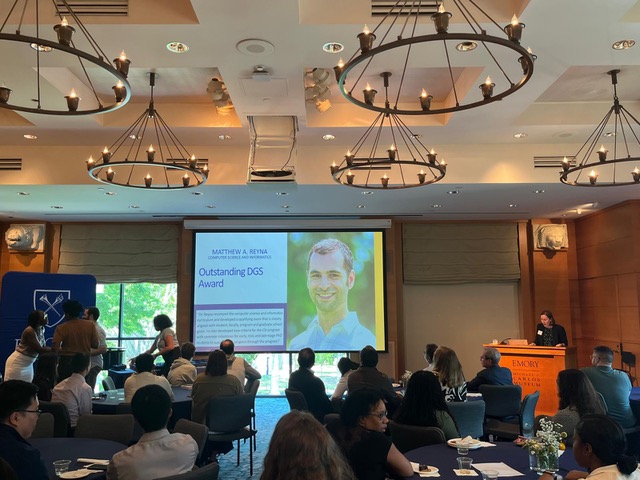
Dr. Matthew Reyna has been named the recipient of an 2026 Laney Graduate School Award for Outstanding Director of Graduate Studies. This recognition reflects the excellence of Dr. Reyna's contributions to the academic community by providing outstanding support for graduate programs and their students and faculty, and his commitment to advancing graduate education at Emory.
Dr. Lucas Mckay’s laboratory was selected as the lead clinical site
April 2026
Dr. Lucas Mckay’s laboratory was selected as the lead clinical site for a multi-site randomized clinical trial of CueStim assistive technology for freezing of gait (FOG) in Parkinson’s disease (PD). Dr. Mckay’s team will also host the sponsor for technology refinement activities to finalize the protocol and data collection procedures, including video-based assessments and body-worn stimulator technology.
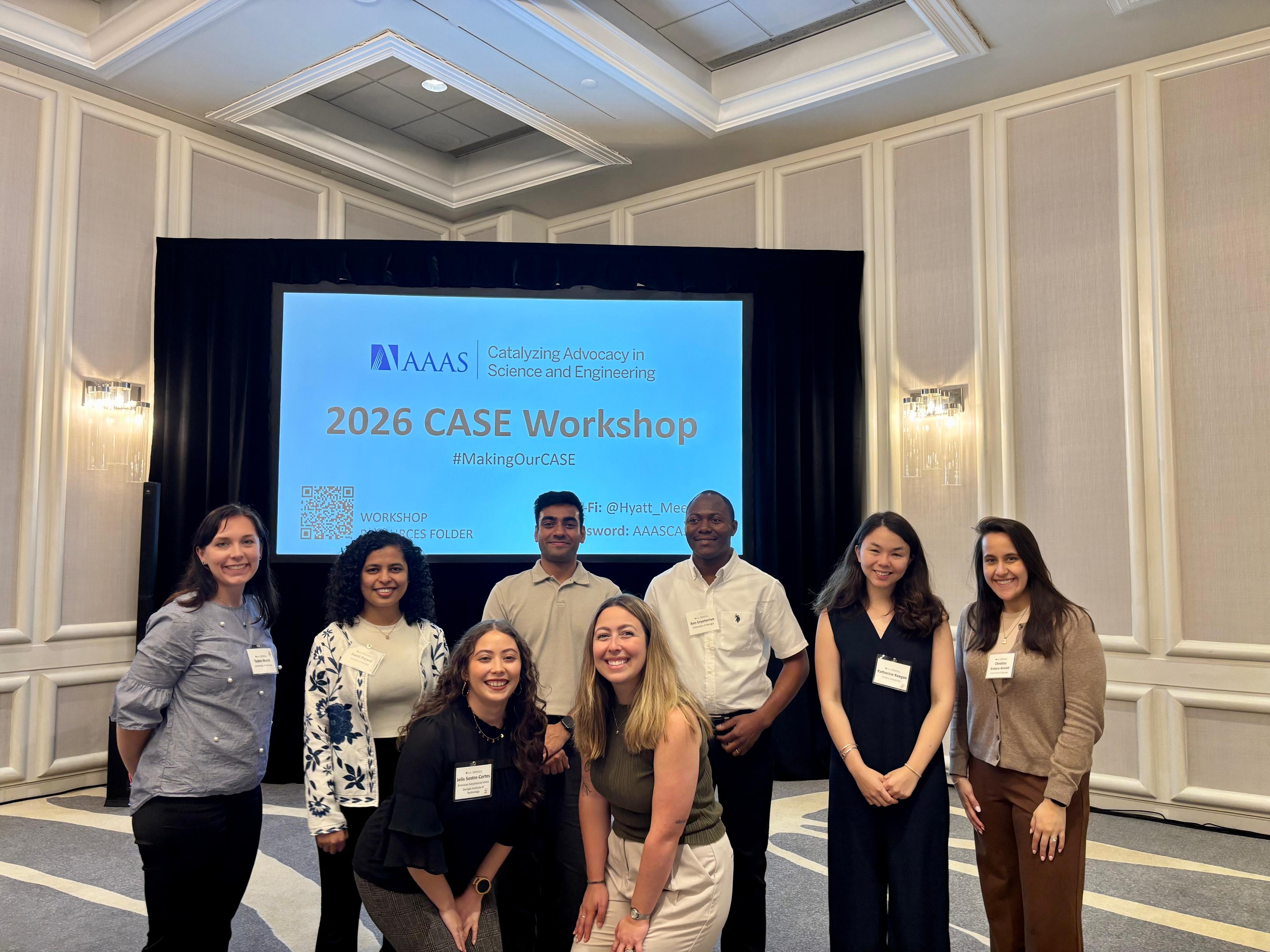
Swati Rajwal was selected to represent Emory University at AAAS CASE Workshop
April 2026
Swati Rajwal from Dr. Sarker’s lab has been selected to represent Emory University at the 2026 CASE Workshop organized by the American Association for the Advancement of Science (AAAS). This nationally recognized program provides training in science policy, federal research funding processes, and communicating scientific impact to policymakers.
"Representing Emory at the AAAS CASE workshop was a powerful reminder that the research we do matters far beyond our labs. It was fantastic meeting with Georgia’s congressional offices to discuss how my research in AI for biomedical informatics can be translated into policymaking." - Swati Rajwal.

Dr. Saima Rathore have received an award from the BrightFocus Foundation
April 2026
Dr. Saima Rathore has received BrightFocus Alzheimer's Disease Research Award. The award begins July 1st, 2026 and totals $300k over three years.
The research aims to uncover the biological complexity of Alzheimer’s disease and related dementias (AD/ADRD) by integrating large-scale cerebrospinal fluid (CSF) proteomics with imaging, genetics, and clinical data from ADNI. This research aims to identify protein co-expression networks that reflect distinct disease processes and link them to core features of AD pathology, including amyloid, tau, vascular injury, and co-pathologies. These networks are then used to define biologically meaningful patient subtypes, capturing the heterogeneity that traditional clinical diagnoses often miss. Next, we translate these CSF-based insights into more clinically accessible tools by developing machine learning models using plasma proteomics. These models aim to (1) recapitulate CSF-derived disease signatures and subtypes, and (2) predict longitudinal disease progression, including cognitive decline and neurodegeneration. Overall, this work bridges deep molecular profiling with scalable blood-based biomarkers, advancing a precision medicine framework for AD by enabling biologically grounded patient stratification and prediction of disease trajectories.
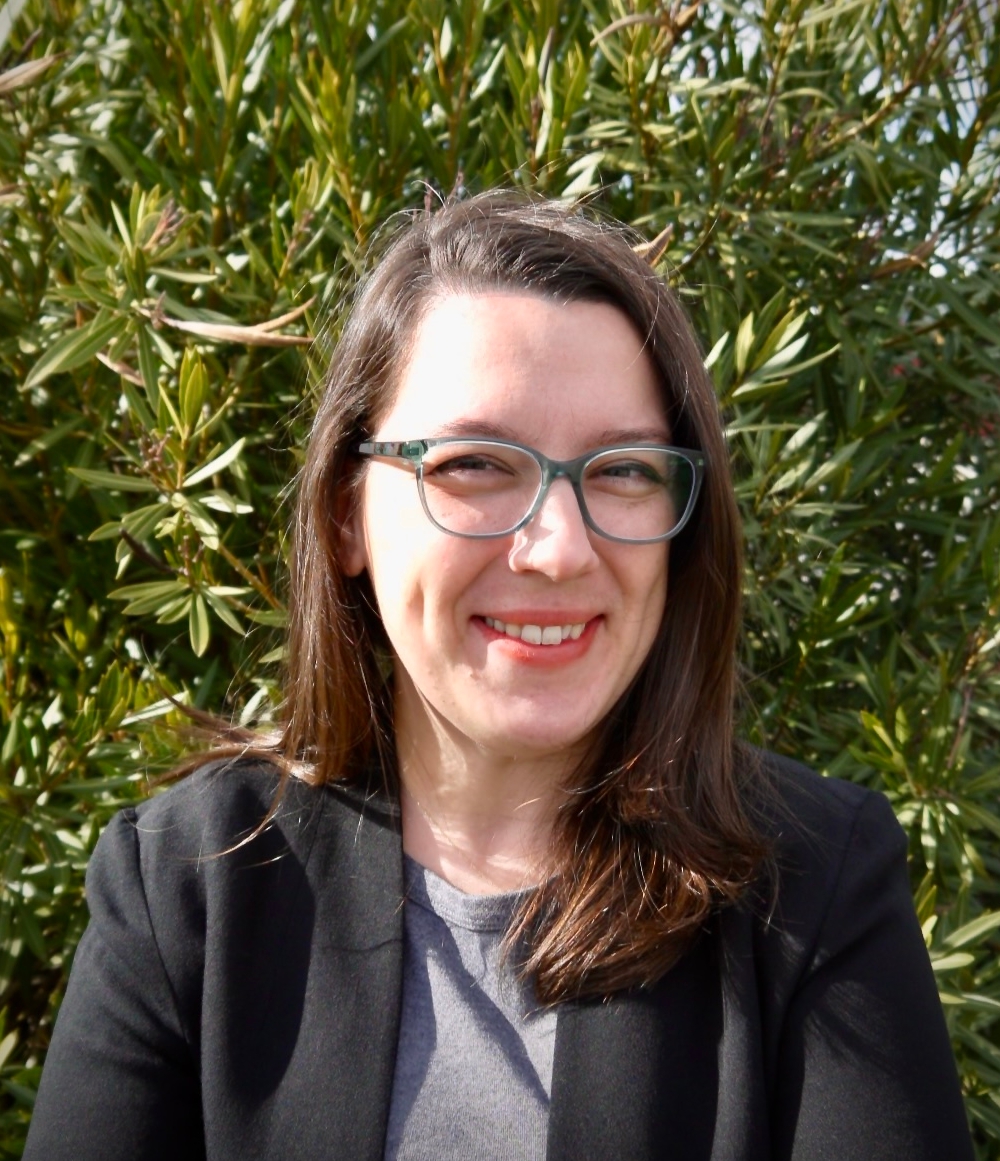
Dr. Selen Bozkurt have received a Discovery Grant.
March 2026
Drs. Selen Bozkurt (PI) and Ravi B. Parikh (MPI) (Winship Cancer Institute) have received a Discovery Grant from the Fund for Innovation in Cancer Informatics for their project ECLIPSE, which uses LLMs for trial emulation.

Dr. Gari Clifford was awarded a RSPH Accelerator Award.
March 2026
Dr. Gari Clifford was awarded, with collaborators in Rollins, a RSPH Accelerator Award of $176,433 for “AI-Enabled Early Detection of Maternal Hypertension and Pre-Eclampsia in an Under-Resources Georgia Community.” The RSPH Accelerator Awards are intended to support research projects emerging from RSPH Accelerators that can accelerate work across two or more departments. This project will leverage the safe+natal toolkit as part of a community-based prenatal program to improve the recognition and treatment of maternal hypertension and pre-eclampsia among pregnant women in Clarkston, GA.

Drs. Ismail and Bozkurt received a grant from ACOG.
February 2026
Drs. Azra Ismail, Nadi Kaonga, and Selen Bozkurt received a pilot grant from the American College of Obstetricians and Gynecologists (ACOG) Foundation on their project "AI-Enabled Clinical Training for Equitable Menopause Care".
The project proposes a two-year initiative to design, implement, and evaluate an artificial intelligence (AI)-enabled training module on menopause care for OB/GYN residents. In Year 1, the team will develop a menopause-focused curriculum and an accompanying chat and voice-based tool to provide simulated patient interactions on menopause. In Year 2, they will implement and evaluate the effectiveness of the module, using an implementation science framework (CFIR) to guide our approach. The ultimate goal of the project is to improve clinician capacity to provide equitable, personalized care for midlife individuals, addressing a significant gap in gynecological care.

Dr. Azra co-organized a panel at the AI Impact Summit
February 2026
Dr. Azra Ismail co-organized and moderated a cross-sector panel with Myna Mahila Foundation and MASH Project Foundation at the AI Impact Summit in Delhi, India, titled “From Research to Reality: Building Inclusive Health-AI for India.” The session brought together leaders from research, design, digital health, philanthropy, and grassroots organizations to explore how artificial intelligence can be responsibly translated from research into scalable, community-centered solutions. Panelists included Prerak Mehta (Dalberg Design), Sunandan Madan (Dhwani Rural Information Systems), Anunaya Jain (Jhpiego), Taniya D. Kaul (Myna Mahila Foundation), Aarushi Gupta (Digital Futures Lab), and Vikas Yadav (Gates Foundation).
The discussion emphasized that inclusive AI in healthcare must be grounded in lived realities, particularly for women and underserved populations. Together, the panel examined practical challenges, including data equity, last-mile delivery, trust-building with communities, and the importance of co-design to ensure that AI innovations are implemented ethically and can be sustained in the long term.

JaMor Hairston was inducted into the Edward A. Bouchet Graduate Honor Society.
February 2026
JaMor Hairston from Dr. Sarker’s lab was Inducted into the Edward A. Bouchet Graduate Honor Society. This honor recognizes scholars of exceptional character, leadership, and commitment to expanding opportunity in STEM fields. JaMor's research leverages NLP and LLMs to address health equity challenges, including maternal health and substance use. His induction into the Bouchet Society reflects both his outstanding academic achievements and his dedication to embodying Dr. Bouchet's legacy of breaking barriers and lifting others along the way. Further details about the society can be found here.

OpenBMI participated in IT Flex at Global Impact Academy
February 2026
OpenBMIand BMI Outreach teams participated in IT Flex Friday 2026 at Global Impact Academy in Fairburn, GA, providing high school students with hands-on exposure to AI and health data science.
During the session, Dr. Selen Bozkurt and Dr. Azra Ismail introduced students to real-world applications of AI in healthcare. Elizabeth Nemeti discussed how biomedical data are collected and preprocessed. Tricia Park explained how machine learning models are trained and validated. Biniam Garomsa concluded the session by discussing model evaluation, explaining how researchers assess performance using appropriate metrics. As a hands-on activity, students built a simple cough detection application using Google Teachable Machine.

Dr. Johann Vargas was profiled in The Scientist
February 2026
Dr. Johann Vargas-Calixto, a postdoctoral researcher working with Dr. Clifford, was featured in the Postodc Potrait series for The Scientist, a publication dedicated to covering a wide range of topics central to the life-science fields. The article covered his career to-date, his hopes, passions, and desire to be an espresso machine.

Ruiying Liu Received 2026 ASPNR Travel Grant
January 2026
Ruiying Liu, a postdoctoral researcher in Dr. Wang’s lab, has been selected as the recipient of the Erin & Darren Schwartz Research Scientist 2026 Travel Grant by the American Society of Pediatric Neuroradiology (ASPNR). This award recognizes early-career researchers who show strong potential to contribute to the field of pediatric neuroradiology.
BMI Launches an AI and Neurohealth Center - BRAINS
January 2026
BMI is thrilled to announce the launch of the Center for Brain and Behavior AI for Neurohealth Science and Support (BRAINS), co-founded and co-directed by Drs. Samneh Nasiri and Hyeokhyen Kwon.
Brain and behavioral health challenges impact tens of millions of people in the U.S., yet access gaps remain profound, especially for medically underserved communities. At BRAINS, we believe AI can be a powerful force for neurohealth equity, but only if it is:
- Clinically validated
- Patient-centered
- Designed to translate into real-world care
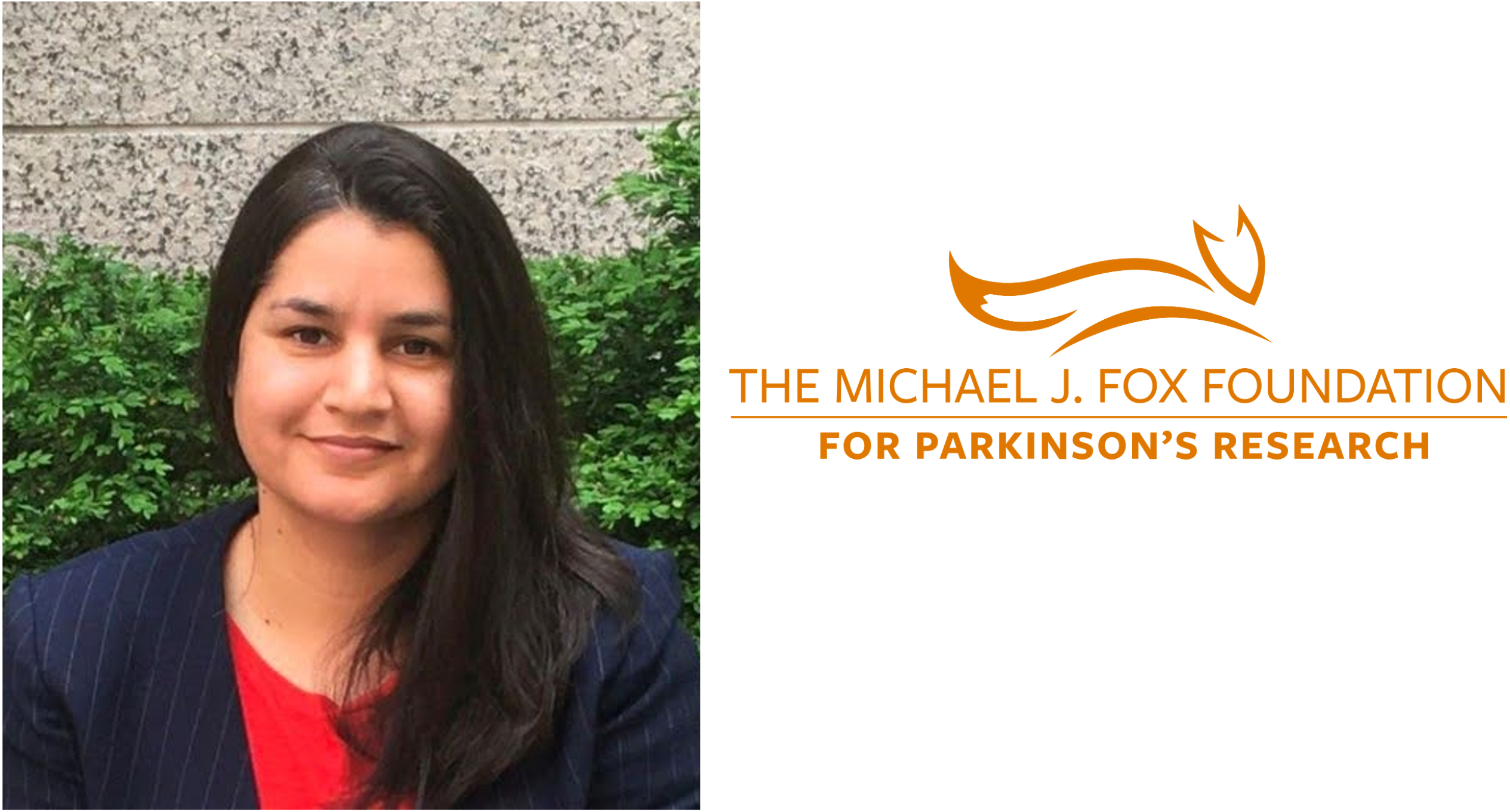
Dr. Saima Rathore Secures MJFF Funding for Machine Learning-Driven Proteomics in Parkinson’s and Lewy Body Disease
January 2026
In addition, Dr. Rathore is a co-Principal Investigator on a second MJFF-funded proposal led by Dr. Nicholas Seyfried, focused on developing proteomics-based methods for detecting α-synuclein pathology. This work aims to advance molecular tools for identifying pathogenic synuclein and improving biological characterization of Parkinson’s disease.