
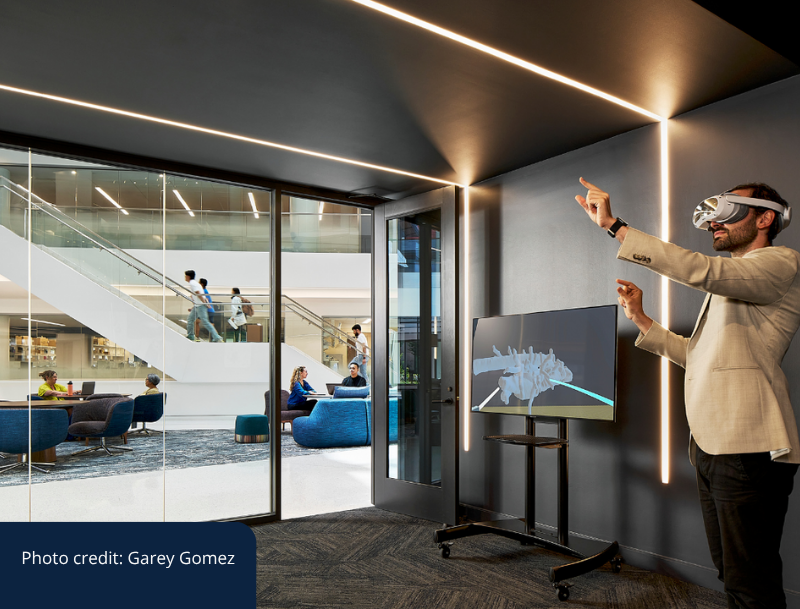
A bright pink human larynx emerges from a humming 3D printer. Simultaneously, a researcher tightens their VR headset. Employees at a start-up company raise their coffee mugs in celebration of securing funding. At the Emory Innovation Center, every day blends moments of science, technology and entrepreneurship.
“The Innovation Center is here to help people move faster. Whether you’re printing heart valves or developing a new diagnostic tool, we want to be the place that grows your idea into reality,” says associate dean of innovation Wilbur Lam (pediatrics and biomedical engineering).
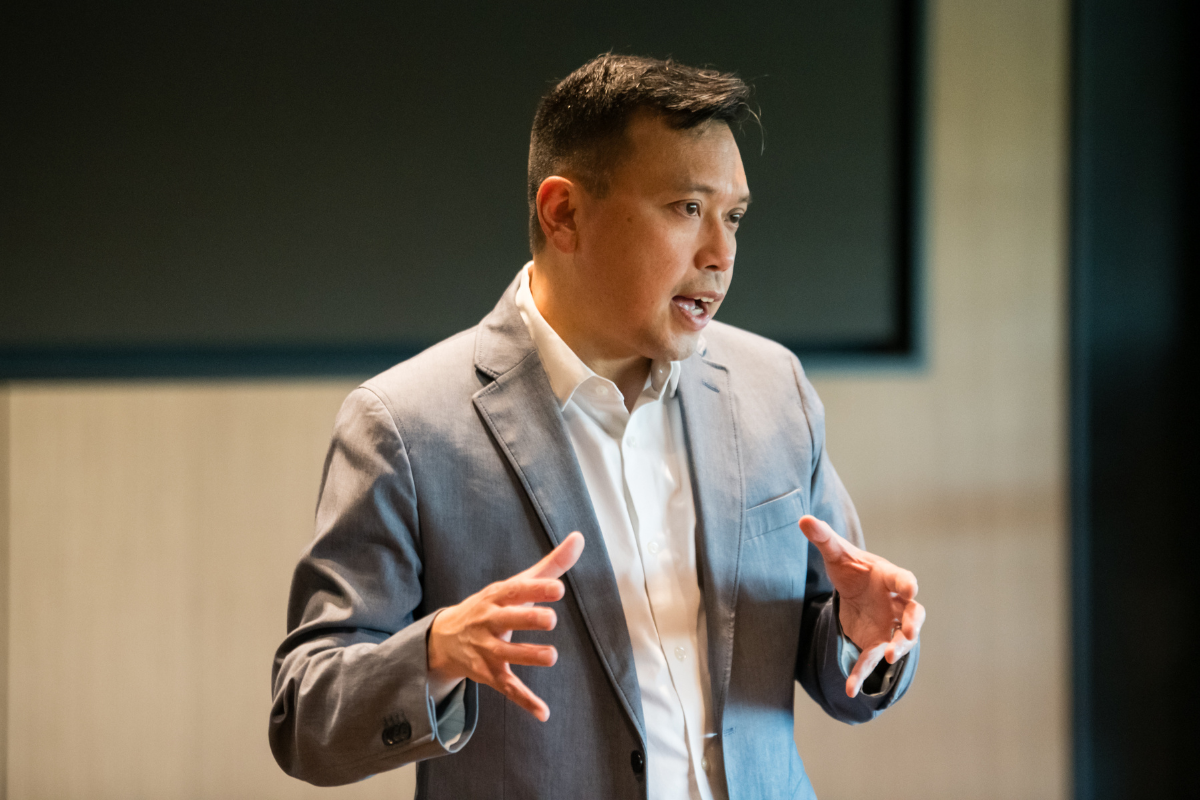
Lam champions a welcoming, low-barrier space where anyone in the Emory community—regardless of experience level—can build, test and grow their vision.
The Innovation Center equips Emory-affiliated researchers, clinicians and entrepreneurs with the tools, expertise and space to take early ideas and scalable projects to the next level. Lam established the Innovation Center in 2023 in the Health Sciences Research Building II. He envisioned the Innovation Center as a one-stop shop where faculty can bring ideas to life.
The tools to move forward, faster
Emory’s Innovation Center is a launchpad for biomedical breakthroughs. At its core are four translational research services.
3D printing and 3D bioprinting
As a leader of the Innovation Center, Morgan Greenleaf knows firsthand the power of 3D printing in the Innovation Center. Greenleaf doubles as the chief operating officer for the health start-up Water Bear Bio.
Co-founded by Emory School of Medicine professors Jesse J. Waggoner (medicine) and David R. Myers (biomedical engineering), Water Bear Bio developed an accessible solution for nucleic acid extraction and storage. With early guidance from the Innovation Center, they secured over $250,000 in non-dilutive funding, earning recognition as a semi-finalist in the MIT Solve Global Health Equity Challenge.
“The company wouldn’t be where it is today without the rapid prototyping enabled by the center and its engineers,” says Greenleaf.
3D printing and 3D bioprinting allow researchers to produce custom anatomical models and medical prototypes in-house. Researchers use these to plan procedures, teach anatomy and test new devices without relying on expensive vendors or long production timelines. “What once took months can now be done in days,” summarizes Martin Tomov, Innovation Center core director.
3D bioprinting adds another layer of possibility, enabling the fabrication of tissue-like structures that mimic biological function. Tomov adds, “Together, these technologies accelerate innovation and give investigators hands-on tools to move forward, faster.”
Micromachining
Micromachining allows scientists to create ultra-precise features within small, models of human-like tissue. These models, known as new approach methodologies scaffolds and organoids, are designed to mimic complex body parts, such as the brain, blood vessels and other organs.
While it may sound like something out of a semiconductor lab, these mini organs are helping scientists answer big questions, such as how cancer spreads or how a new drug might work in the body. Kelly Goldsmith (pediatrics) and Jenny Shim (pediatrics) have employed these advanced bioprinted tissue systems to investigate the behavior of a type of cancer known as neuroblastoma.
“Emory’s Innovation Center is a strategic catalyst that gives us a decisive edge in advancing transformative research, for all fields of science that will eventually help our patients,” says Shim.
Combined with 3D bioprinting, micromachining opens new ways to test therapies, model diseases and personalize treatments faster and more affordably than ever before.
As the national dialogue evolves around translational science methods, Emory’s scaffolds and organoid platforms are leading the discussion. Scientists see these technologies not only as powerful tools for discovery but also as key drivers for future publications, funding and breakthroughs in medicine.
“We’ve seen researchers across Emory use these technologies to further their goals in securing grants, publishing high-impact papers and advancing translational research,” says Wilbur Lam.
Extended reality
“Extended reality is about more than just putting on a headset,” asserts Santiago Arconada Alvarez. “It’s about stepping into a fully interactive environment where you can explore clinical challenges in real-time.”
Imagine surgeons rehearsing complex procedures in a simulated operating room. Or medical students diagnosing virtual patients by walking through a beating heart. “Extended reality blends virtual, augmented and mixed reality to explore clinical challenges, accelerate training and breathe life into health data,” adds Arconada Alvarez.
Education and networking
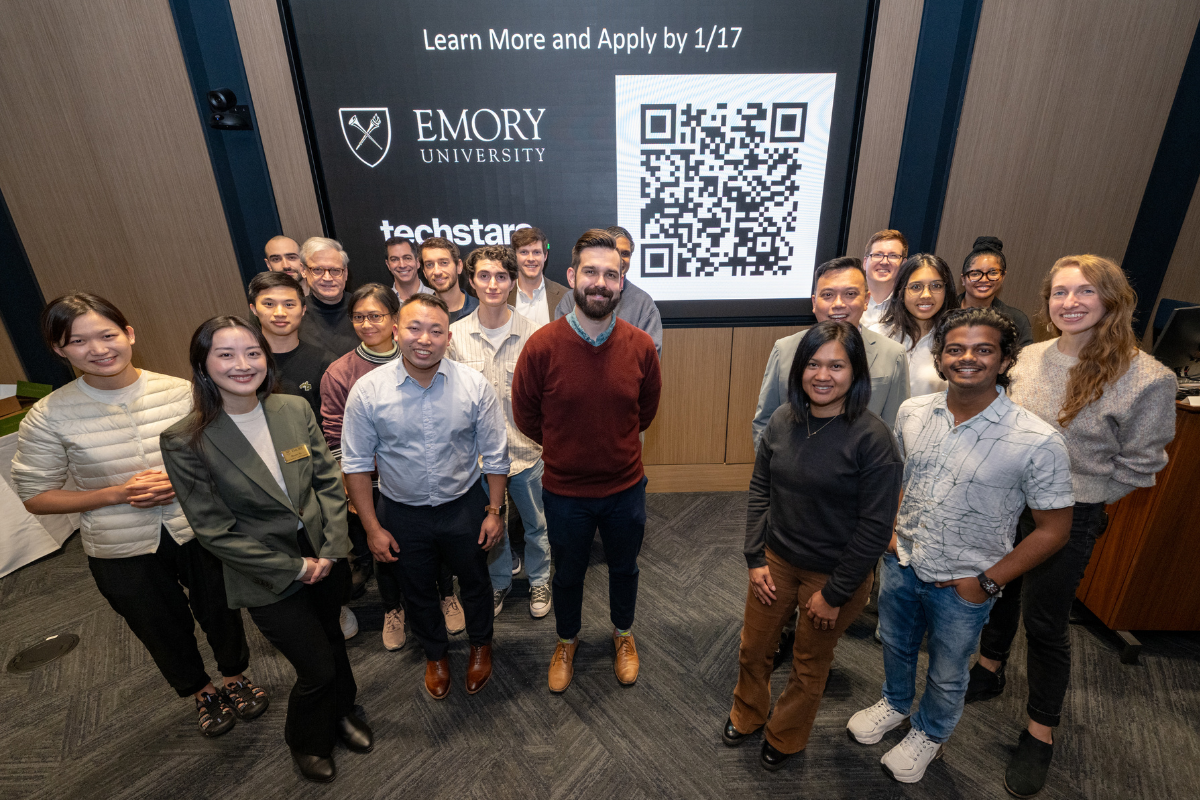
You don’t need a fully developed start-up to begin your journey with the Innovation Center. The Portal X Emory Innovation Certificate Program provides researchers with practical guidance on exploring commercialization opportunities, helping generate promising concepts into viable ventures.
Complementing this, the Innovation Center brings together scientists, clinicians and investors during a monthly Bioentrepreneurship Networking series. These sessions take place every third Thursday from 4:30 to 6:00 p.m. in the Health Sciences Research Building II, sixth floor, room N600.
Move faster with guidance, community and momentum
In the coming years, the Emory Innovation Center plans to continue deepening its footprint across the Southeast. Recently, the Innovation Center merged with the Georgia Clinical & Translational Science Alliance’s AppHatchery. A mobile app consulting and development service, the AppHatchery designs tools that improve individual and population health outcomes.
Once projects developed at the Innovation Center or elsewhere at the university are ready for the next step, Lab2Launch provides flexible, low-cost co-working and wet-laboratory space to start-up companies developing promising technologies for the benefit of human health. “Lab2Launch enables companies to put one foot into the commercial world while being supported by the amazing resources and people of Emory,” says Greenleaf.
Regardless of the project, the Innovation Center transitions ideas from concept to real-world impact. “Whether you're prototyping a device, exploring extended reality or testing a new idea, the Innovation Center helps you move faster with guidance, community and momentum,” emphasizes Lam.