


The CAIRE PhD fellowship aims to support the next generation of researchers applying AI and data science to advance maternal, child, and reproductive health. Fellows will engage in community-based research, receive mentorship from Emory faculty, and participate in a cohort-based training experience and network designed to prepare them for impactful, interdisciplinary careers in this space.
Current Fellows

Kaprice S. Welsh
Nell Hodgson Woodruff School of Nursing
Project Advisors: Dr. Rasheeta Chandler (Nursing), Dr. Hannah Cooper (Nursing), Dr. Abeed Sarker (Biomedical Informatics)
Bio: A PhD student at Emory University's Nell Hodgson Woodruff School of Nursing with research interests that explore how implementation and translational science can be used to develop AI/ML tools that help providers better coordinate care for pregnant and postpartum women with substance use disorders, supporting both mother and baby while reducing stigma and gaps in care. As a certified nurse-midwife with over 30 years of clinical experience, she brings deep expertise in maternal health to her doctoral work, where she serves as a research assistant on Dr. Hannah Cooper's NIH R01 study and Dr. Rasheeta Chandler's AI as an AID project. Recently recognized as a Fellow of the American College of Nurse-Midwives (FACNM), Kaprice's scholarship centers equity-informed approaches that honor women's lived experiences while addressing the systemic barriers to care.
In her dissertation work, she hopes to integrate natural language processing and machine learning methods to develop innovative solutions for predicting treatment engagement trajectories and improving care coordination for vulnerable maternal populations. Outside of her academic pursuits, she enjoys reading, spending time with her children, traveling, and cooking.
Project Summary: Overdose deaths among postpartum women increased 81% between 2017-2020, yet mental health comorbidities in pregnant and postpartum women with substance use disorder (PPW-SUD) often go undetected. This fellowship will apply AI/machine learning methods, including large language models, to analyze 100+ qualitative interviews with PPW-SUD in Georgia to identify mental health patterns, treatment engagement trajectories, and protective factors that enable flourishing. Findings will directly inform content development for digital interventions. Building on partnerships with the Georgia Family Connection Partnership (GaFCP) and Mom's Heart Matters mHealth initiative, this work will directly inform Project mMOM Care (funded, launching Fall 2025). Analysis of interview data will guide content buildout for the GoMo Health platform, ensuring messaging, resources, and support tools reflect women's lived experiences and actual needs. The project will also leverage partnerships with addiction treatment programs including Recovery Place and Gateway. Results will help providers recognize mental health needs, reframe Plans of Safe Care from surveillance to support, and shape patient-centered digital interventions grounded in what women say they need.

Alireza Rafiei
Department of Biomedical Informatics, Emory School of Medicine
Project Advisors: Dr. Nasim Katebi (Biomedical Informatics, OBGYN, & Global Health)
Bio: A fourth-year (2022-now) Ph.D. student in the Computer Science and Informatics program at Emory University, advised by Prof. Katebi and Prof. Clifford. My focus is on ML/AI systems in production, and I’m currently exploring creative use cases of AI in healthcare. Before Emory, I completed my M.S. degree at the University of Tehran. My passion lies in crafting innovative AI solutions and engineering techniques to tackle real-world challenges, blending cutting-edge technology with impactful applications. I’m driven by a deep curiosity to push the boundaries of AI research and collaborate on transformative projects.
Project Summary: Preeclampsia is a silent and deadly complication of pregnancy that often goes undetected until severe harm has already occurred, particularly in low-resource settings where access to continuous monitoring is limited. My project tackles that gap by developing a scalable, AI-driven prenatal monitoring framework that transforms low-cost, mobile one-dimensional Doppler ultrasound (1D-DUS) signals and routine clinical data into early, personalized risk predictions for preeclampsia. Drawing on one of the largest longitudinal maternal–fetal datasets collected across community and clinical settings in Guatemala and the United States, the study will uncover subtle cardiovascular signatures that reveal how risk emerges and evolves throughout pregnancy. By converting intermittent prenatal visits into dynamic risk trajectories and clinically interpretable insights, this work aims to shift preeclampsia care from reactive treatment to proactive prevention, expanding access to life-saving monitoring, strengthening clinical decision-making, and reducing preventable maternal and neonatal complications worldwide.

Aradhana Thapa
Hubert Department of Global Health, Rollins School of Public Health
Project Advisors: Dr. Azra Ismail (Biomedical Informatics & Global Health)
Bio: A PhD candidate in Global Health and Development at Emory University whose dissertation, supervised by Dr. Azra Ismail, focuses on user engagement with LLM-based chatbots for sexual and reproductive health in low-resource settings, with an emphasis on equity. She brings more than a decade of experience designing, implementing, and evaluating affordable, community-based health programs across Asia and Africa, including leading integrated digital and Community Health Worker (CHW)–driven care systems in Nepal. Her work has been published in The Lancet Global Health, PLOS Global Public Health, and Global Health: Science and Practice, focusing on CHW systems, digital health delivery, and cost-effective care models. She holds an MPH from the University of Washington and training in global health effectiveness at Harvard University.
Project Summary: As a 2026 CAIRE Fellow, Aradhana investigates how LLM-powered chatbots handle high-stakes sexual and reproductive health (SRH) questions, developing taxonomies and safety guidelines to support accurate, empathetic, and context-sensitive responses. Her project builds on a long-standing partnership with the Myna Mahila Foundation (Myna) in India, leveraging real user interactions to understand the risks and responsibilities of digital SRH systems. In this study, she will analyze user questions from Myna's SRH chatbot to develop a taxonomy of high-stakes scenarios, and then evaluate a purposive sample of queries and chatbot responses against global SRH guidelines, digital health safety standards, and national clinical protocols to assess accuracy, empathy, and appropriate escalation. Insights from this evaluation will contribute to the development and refinement of safety response guidelines to support safer, more ethical, and contextually grounded SRH chatbot communication.
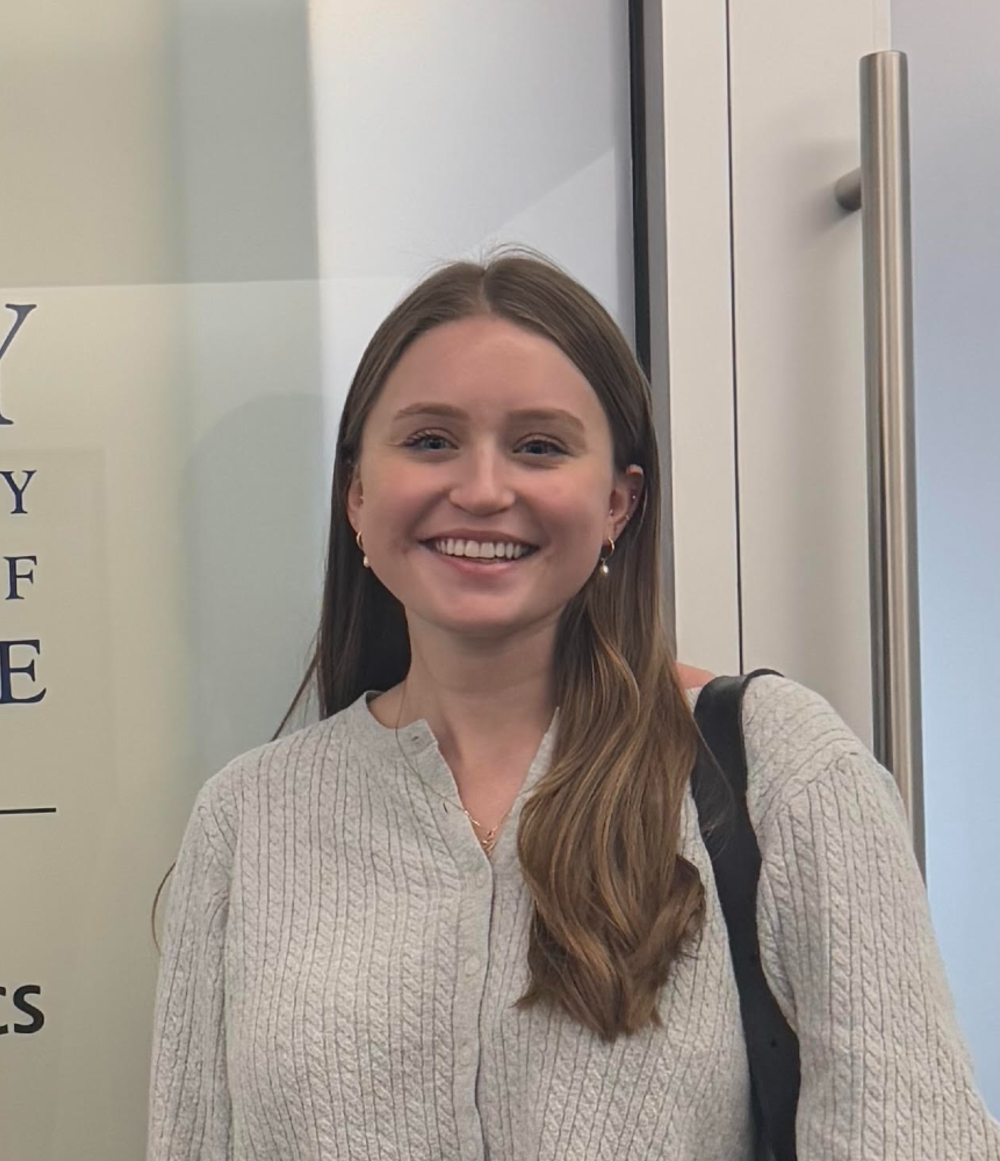
Danielle Carson
Department of Epidemiology, Rollins School of Public Health
Project Advisors: Dr. Angie Bengston (Epidemiology), Dr. Nasim Katebi (Biomedical Informatics, OBGYN, & Global Health)
Bio: A second-year PhD student in Epidemiology at the Rollins School of Public Health. Her work sits at the intersection of epidemiology, clinical research, and health technology, with a focus on cardiometabolic complications during pregnancy. She studies how to apply and develop innovative tools to identify cardiometabolic risk early in gestation, enabling timely and effective intervention. Danielle holds a BS in Public Health and an MSPH in Epidemiology from the University of South Carolina. During her graduate training, she worked on statewide COVID-19 antibody prevalence studies and served as a Junior Epidemiologist with the South Carolina Department of Health and Environmental Control. After graduation, she further refined her expertise at Johns Hopkins University, contributing to multi-site pregnancy HIV cohort studies, which sparked her passion for her current area of research.
Project Summary: Danielle’s project uses continuous glucose monitoring data from the Gestational Diabetes Risk Factors and Outcomes among American Samoan Women (GROW) study, a population with one of the highest global burdens of gestational diabetes, to characterize glycemic patterns in early pregnancy. She applies machine learning methods that integrate glucose data with clinical and genetic information to predict gestational diabetes risk and identify high risk subgroups for targeted early screening. The ultimate goal of this work is to translate complex physiologic data into an interpretable, clinically actionable risk assessment tool that enables earlier intervention and reduces cardiometabolic disparities.

Masoud Nateghi
Department of Biomedical Informatics, Emory School of Medicine
Project Advisors: Dr. Reza Sameni (Biomedical Informatics)
Bio: Masoud is a PhD candidate in the Department of Biomedical Informatics at Emory University. He earned his bachelor's degree in electrical engineering from Sharif University of Technology, with a focus on biomedical engineering and control theory. His research interests include statistical signal processing and the application of machine learning and deep learning to biomedical and health-related problems.
Project Summary: Noninvasive fetal electrocardiography (FECG) offers a promising approach for monitoring fetal cardiac health by capturing electrophysiological information beyond conventional heart rate analysis. The project will develop the first foundation model tailored to FECG, leveraging large, clinically annotated datasets to learn generalizable representations of fetal cardiac signals. These representations can be transferred to a range of downstream tasks, including fetal ECG peak detection and the prediction of adverse pregnancy outcomes such as fetal arrhythmias, growth restriction, and stillbirth risk across diverse populations.

Sumon Kanti Dey
Department of Biomedical Informatics, Emory School of Medicine
Project Advisors: Dr. Azra Ismail (Biomedical Informatics & Global Health)
Bio: A PhD student in Computer Science and Informatics at Emory University, advised by Dr. Azra Ismail. My focus is on the intersection of healthcare and natural language processing (NLP), where I aim to develop fair, inclusive, and human-centered AI systems that improve health equity and outcomes for underserved communities. I study and explore how large language models and data-driven systems behave in high-risk and socially sensitive healthcare contexts, including topics that are often stigmatized or underrepresented, and where gaps remain in cultural understanding, intent interpretation, and alignment with human expertise. To address these challenges, my ongoing work investigates culturally aware evaluation approaches for LLMs, leverages social media and online data to understand human behavior and well-being at scale, and examines how people interpret and rely on AI systems in real-world settings. Through this research, I aim to contribute to AI technologies that are technically effective, trustworthy, equitable, and responsive to diverse human experiences.
Project Summary: Access to accurate and culturally appropriate sexual and reproductive health (SRH) information remains limited in many parts of the Global South, particularly for women and underserved countries. While large language models (LLMs) are increasingly used to support SRH information seeking, they often struggle with multilingual, code-mixed, and culturally sensitive queries, leading to responses that can be misleading, unsafe, or misaligned with local norms and regulations. This project proposes SRHBench, a multilingual, culturally grounded evaluation framework for assessing LLM performance on sensitive SRH topics in low-resource settings, with an initial focus on English, Hindi and Hinglish in the Indian context. Leveraging real-world SRH questions collected through a community-based WhatsApp chatbot and validated by clinical and public health experts, SRHbench will evaluate model responses using intent- and urgency-aware rubrics that account for medical accuracy, legal alignment, cultural sensitivity and risk. By systematically identifying cultural and linguistic gaps in current LLM behavior, this work aims to improve the safety, relevance, and equity of AI-assisted SRH information and support the responsible development of generative AI in sensitive healthcare settings.

Jessica Otero Machuca
Hubert Department of Global Health, Rollins School of Public Health
Project Advisors: Dr. Rachel Hall-Clifford (Human Health & Sociology), Dr. Gari Clifford (Biomedical Informatics & Biomedical Engineering)
Bio: Jessica Otero Machuca, MPH CHES, is a doctoral student in Global Health and Development at the Rollins School of Public Health at Emory University. She is passionate about using participatory methods and principles of human-centered design in producing innovative solutions to public health issues. She is specifically interested in working with Latin American immigrants and supporting social innovation in Latin America. In doing so, she hopes to address the social determinants of health contributing to health inequities in Latin American and immigrant populations. In doing so, her goal is to address structural, systemic, and migration-related barriers contributing to negative health outcomes in Latin American populations across the Americas.
Project Summary: Maternal mortality remains disproportionately high in Colombia’s Pacific region, where healthcare fragmentation and structural barriers limit timely access to quality perinatal care. In Chocó, midwives provide essential maternal health services but often lack integration into formal health systems and access to tools that support early risk detection and referral. This project uses participatory research in Chocó to generate actionable evidence on how social determinants shape inequities in maternal healthcare access and uptake. The project will co-design Safe+Natal, an AI-enabled maternal health decision support tool, with midwives, recent mothers, and health system leaders in partnership with Asorediparchocó and Pontificia Universidad Javeriana Cali. Grounded in co-design, the work will address community priorities around trust, usability, and equity, strengthening referral pathways and perinatal care coordination while establishing a scalable model for community-driven, responsible use of AI to improve maternal health in underserved rural settings.