CONTINUUM
March edition of CNM's CONTINUUM newsletter
March 2026
We are thrilled to present the March issue of CNM's monthly newsletter, CONTINUUM! Drug discovery is an iterative, integrated continuum of activities ranging from target identification and validation to lead optimization, preclinical, and clinical testing. This approach merges chemistry, biology, and medicine with technologies like AI to accelerate discovery and improve success rates from bench to bedside. CNM exists to support and enable Emory researchers and clinicians to achieve their translational goals across this continuum - we look forward to working with you! Email us any time at newmedicines@emory.edu.
In this issue (click to jump to sections):
💡 View From the Top: A Message from SOM Dean, Sandra Wong
💊 2026 Emory 3D Symposium: The Future of Therapeutic Innovation
🩺 Clinical Trials to Watch in 2026
🔬 CNM Pipeline Update: Xiulei Mo
🧠 Brain Injury Awareness Month
🧬 BDCI Trainee Symposium: Drugging the Undruggable (ABSTRACT DEADLINE APPROACHING)
✉️ Contact Us
View from the Top |
A message from SOM Dean, Sandra WongI am so pleased to add my greeting to all of you in the latest edition of this newsletter for Emory’s drug discovery community. CONTINUUM is an apt name since drug discovery is just the starting point. The continuum from laboratory breakthroughs to clinical care is defined by discovery, development, and delivery. |

The continuum, by definition, must include collaborations between basic research scientists, expert clinicians and partners in data and computational science, technology transfer, clinical trials—just to name a few.
When I think about the School of Medicine’s research enterprise, there is a lot to be proud of. Those of you who work in the dynamic drug discovery community know that Emory is making a tangible impact in this field. Synergy and connection have been, and will continue to be, integral to making the continuum robust and frictionless, accelerating our path from bench to bedside. To be sure, groundbreaking discovery is at the heart of this impact. And our impact on the world includes the patients in front of us as well as our learners who represent the future of innovation.
I hope you enjoy this edition of CONTINUUM—I know I’m looking forward to seeing future newsletters.
Sandra Wong, MD, Dean, Emory University School of Medicine
Pictured above: SOM Dean, Sandra Wong (center) with CNM co-Directors Dennis Liotta (left) and Haian Fu, Right.
2026 Emory 3D Symposium |
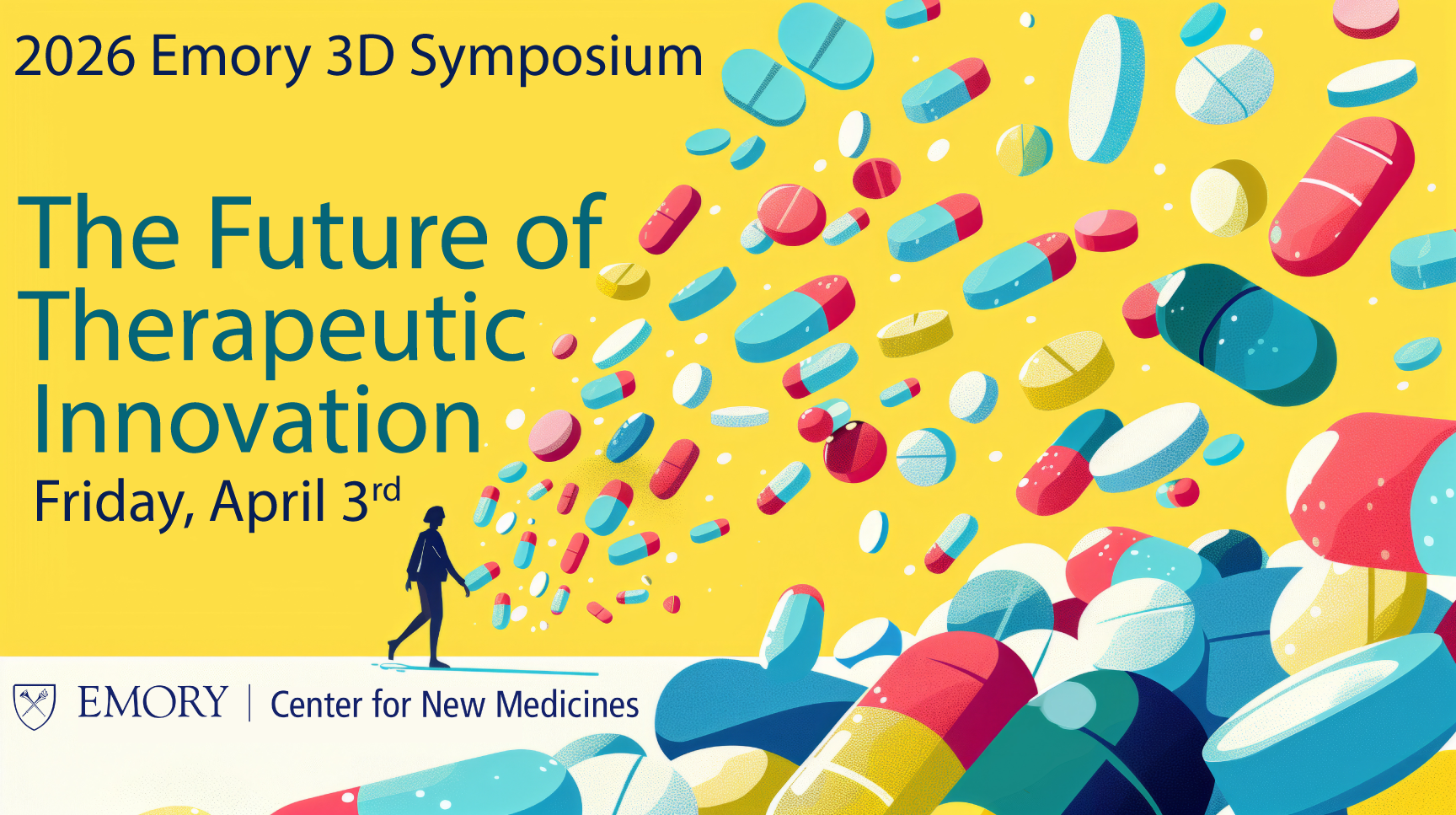
Registration is Open for the 2026 3D (Drug Discovery & Development) Symposium!
The Emory 3D Symposium is an annual event that convenes the drug discovery and development community at Emory, with the goal of educating and inspiring our researchers through a series of talks from academic and industry leaders. In line with the theme The Future of Therapeutic Innovation, this year’s event will feature talks on cutting-edge therapeutic modalities, explore topics such as redefining the concept of druggability, and pioneering new approaches to address unmet medical needs. This program will also include a panel discussion on the Future of Therapeutic Innovation in Atlanta.
See below for details and a link to register today!
Date: Friday, April 3rd
Time: 9:00 AM – 3:00 PM
Location: Margaret H. Rollins Ballroom (1st floor), R. Randall Rollins Building
Keynote Address:
Kevan Shokat, PhD, UC San Francisco, Howard Hughes Medical Institute
Featured Presentations:
Matt Disney, PhD, UF-Scripps Institute for Biomedical Research & Innovation
Ryan Potts, PhD, Vice President, Research (Induced Proximity Platform), Amgen
Eric Sundberg, PhD, Emory University School of Medicine
Chrystal Paulos, PhD, Emory University School of Medicine
Panel Discussion:
Moderator: Justin Burns, PhD, CIO and VP, Georgia Research Alliance
Wilbur Lam, MD, PhD, Vice Provost for Entrepreneurship, Emory University
Courtney Law, PhD: Vice President, Innovation Economy, J.P. Morgan
Doug Gooding: Managing Director, Emory Drug Development Fund
Angela Gill-Nelms: Managing Director, Biolocity
Click HERE to for the full program and to register! Deadline: Wednesday, 3/25
An Expert's Perspective |
Clincial Trials to Watch in 2026In December 2025, Nature Medicine published an article highlighting 11 clinical trials with the potential to transform medicine in 2026. These studies span a wide range of therapeutic areas and modalities, from new vaccines for infectious diseases to cell therapies for rare disorders and cancer, to broadly active small molecule “molecular glues," and more. |

In keeping with the theme of this year’s 3D symposium, The Future of Therapeutic Innovation, the Center for New Medicines sat down with Donald Harvey, Executive Director of the Emory Clinical Research Office (ECRO), to discuss the article and share his insights into the trials he found compelling and most likely to have a major impact for patients.
A “sticky” solution for pancreatic cancer
“I come from a cancer background, so pardon my bias but the first one I'll talk about is the metastatic pancreatic cancer trial,” Harvey said.
This global study (RASolute 302), sponsored by Revolution Medicines, is evaluating Daraxonrasib, an oral, once-daily, multi-selective KRAS inhibitor against standard-of-care chemotherapies in patients with metastatic pancreatic ductal adenocarcinoma, a disease with an extremely poor prognosis. Daraxonrasib functions as a “molecular glue”, binding wildtype and various mutant isoforms of KRAS with cyclophilin A to dampen downstream tumor growth signaling pathways.
Once thought to be undruggable, “KRAS was the holy grail in a lot of ways,” Harvey noted. “A subset of patients with KRAS G12C mutations can benefit from the class led by the Amgen compound (Sotorasib)… but this trial explores a fascinating way to inhibit all KRAS…which is just about every pancreatic cancer patient.”
Harvey added that, “the second line setting where this is being looked at makes perfect sense. Up front, you're going to choose a regimen called FOLFIRINOX (leucovorin, 5-fluorouracil, irinotecan, and oxaliplatin) for patients with good performance status, which is quite intensive” and associated with significant toxicity. But for metastatic patients who do not demonstrate a robust response to first-line regimens, Harvey points out that few options exist beyond chemotherapy. “So, this is a really exciting drug and a really exciting trial for those reasons,” he said.
CAR-T takes aim at autoimmune disease
“Another one that really caught my eye was the myasthenia gravis trial, a disease which is incredibly difficult to manage in some patients.”
This trial (Descartes-08), led by Cartesian Therapeutics, takes a novel approach to this chronic autoimmune disease by using mRNA-engineered chimeric antigen receptor CAR-T cell therapy to selectively target B-cell maturation antigen (BCMA)-expressing plasma cells, which are responsible for producing the pathogenic autoantibodies driving the disease.
“When I first heard of CAR-T cells, the approach was focused on acute lymphocytic leukemia. In fact, the first CAR-T treated individual was a pediatric patient who is still going strong today, over 10 years later,” Harvey enthused. “It was really a magical moment for cancer.”
However, he also cautioned about the challenges of CAR-T therapy in rapidly evolving cancers. “Patients need to be referred early...with cancer, there is very tight window to engineer these cells before the patient’s disease progresses.”
In contrast, Harvey noted, “it makes more sense to investigate this therapy for lifelong diseases like lupus, myasthenia gravis, and other autoimmune neurological diseases.”
Unlike traditional CAR-T approaches in oncology, early safety studies leading up to this trial demonstrated that Descartes-08 appears to be well tolerated in patients, with no dose-limiting toxicity, cytokine release syndrome, or neurotoxicity. “This, to me, was really great,” said Harvey. “Cytokine release syndrome can be difficult to manage in patients… it can cause a lot of morbidity, as it wipes out the patient’s immunoglobulins, so they're very susceptible to infection. This (Descartes-08) is a more targeted approach, which is critical for chronic autoimmune diseases that may not be fatal… if you cause more toxicity than the disease overall, it's not going to be a successful long-term strategy.”
A new solution for TB patients
“The other one that really got me was the TB vaccine,” Harvey said, referring to a large Phase 3, multicenter clinical trial evaluating the safety and efficacy of an investigational Mycobacterium tuberculosis vaccine, M72/AS01E-4. “That, to me, is beautiful, as it addresses a problem we rarely think about in the United States.”
Notably, in an earlier phase 2b clinical study led by GSK, this vaccine was found to reduce progression to active pulmonary TB in infected adults by 54%.
“TB is a major issue in Southeast Asia and in many parts of Africa,” Harvey noted. “Having a vaccine for patients who are positive for TB that allows the immune system to control it … from a long-term perspective, that is huge!” He added, “Kudos to the Gates Medical Research Institute for funding this and carrying that science forward.”
Defining long COVID
Harvey was asked whether he had any insights into the large government-sponsored multicenter UK study known as the STIMULATE-ICP trial. A component of this trial evaluated widely available approved medications hypothesized to benefit individuals with long COVID. He was also asked to comment on the distinctive nature of the trial’s design, which was described as having directly involved patients in the planning and running of the trial.
“It's a great idea.” Harvey responded. “For me, the landmine in that trial is defining long COVID and whether the agents are successful in treating it. Patients may experience vastly different symptoms and so, when measuring the effects of these drugs, what are the biomarkers that show that any efficacy observed is due to these drugs and not something else?”
For the scientific community at Emory, Harvey’s cautioning underscores the importance of having clearly defined parameters and measurable outcomes for any experiment - whether developing a new assay, designing a novel molecule, or planning a clinical trial - to generate meaningful and actionable data.
An immunotherapy solution for breast cancer?
“The other study that I really enjoyed… again, I'm a cancer guy… is the breast cancer data.” Harvey went on to explain, “there are many women who have metastatic disease who have so-called “bone-only disease” or some with relatively stable metastatic sites. These patients undergo long-term therapy but often die of the disease due to a lack or loss of efficacy.”
The BRIA-ABC trial is a multicenter, randomized, open-label study to evaluate Bria-IMT, a cell-based immunotherapy in combination with checkpoint inhibitor, retifanlimab in advanced metastatic or locally recurrent breast cancer patients with no approved alternative therapies available.
“Immunotherapy has not been particularly beneficial in most breast cancer patients,” Harvey added. “Yet this approach looks like it crosses the blood-brain barrier, which is a really great option for those individuals with parenchymal disease in the brain if visceral disease is in check.”
He also noted that this trial is enrolling individuals with all breast cancer subtypes. “You go from typically older women diagnosed with ER-positive disease and their prognosis is pretty good with treatment, to the heartbreaking case of a 35-year-old African American woman with triple negative disease who's got rampant cancer. This is a cancer of interest for us here in Atlanta, where we see a predominance of African American women suffering from the disease. This therapy, if it can be used for metastatic disease and is well tolerated, would be a huge advance in this space.”
Final Thoughts
“That was a great paper!” Harvey concluded. “I thought it was a fun read and got me out of my usual cancer space.”
The Emory Clinical Research Office at Emory, which Harvey oversees, bridges the gap between discovery and therapeutic improvements by speeding the development of novel therapies and interventions to patients. As described by Harvey, the primary focus of their office is to increase clinical trial activation at Emory through reduced contract and budget negotiation times, centralized expertise, and transparent communication.
When asked how his office views itself as filling the gap between discovery and therapeutic solutions, Harvey pointed out the importance of “helping our investigators on both sides of the fence connect more and get a sense of what questions we might ask in patients.” This is the heart of what we (CNM) refer to as bi-directional translational research, which is a central focus for our Center.
When asked to consider how we can drive more of this kind of thinking at Emory, Harvey pointed out that there are already some shining examples of individuals doing this well in the cancer space, including Larry Boise, Sagar Lonial, Haydn Kissick, Chrystal Paulos, Greg Lesinski, and more. However, he agrees that a more intentional, structured approach to this could yield major impact not only for Emory, but for patients around the world. We look forward to partnering with his office to do more of this good work in the future.
We really enjoyed our conversation with Dr. Harvey. Please check back next month for details on exciting clinical trials happening here at Emory!
CNM Pipeline Update |
Mo lab discovers neo-cysteine molecular glues to restore mutant SMAD4 function in cancerThe Mo Lab recently published a new study in Angewandte Chemie describing the discovery of neo-cysteine–directed molecular glues that restore tumor-suppressive protein-protein interactions disrupted by cancer mutations in SMAD4, a central regulator of TGF-β signaling. |
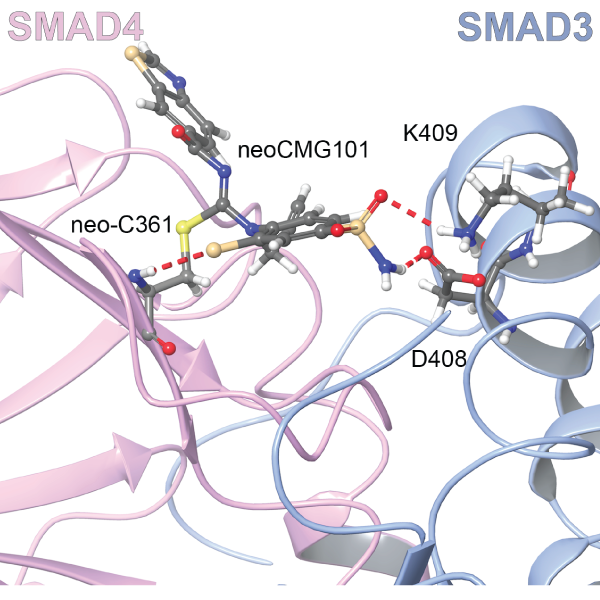
SMAD4 mutations are among the most frequent drivers of aggressive and treatment-resistant cancers, yet the protein has long been considered “undruggable” due to its lack of enzymatic activity. This study introduces a new chemical biology paradigm in which mutation-created neo-cysteines—such as SMAD4 R361C—serve as selective molecular handles for covalent molecular glues that re-stabilize lost SMAD4–SMAD3 interactions. Using a multidisciplinary platform integrating TR-FRET screening, structural biology, proteomics, and cellular functional assays, the team identified first-in-class neo-cysteine molecular glues that restore SMAD4 signaling and suppress malignant phenotypes.
Beyond SMAD4, this work establishes a generalizable strategy for turning cancer mutations into therapeutic opportunities, opening the door to precision molecular glue development across a broad range of previously undruggable tumor suppressors. The study highlights the power of chemical biology–driven discovery to expand the druggable genome and advance next-generation cancer therapeutics.
This work was supported by the Department of Pharmacology and Chemical Biology / Emory Center for New Medicines (PhCB/CNM) Catalyst Award and the Emory CNM Therapeutic Advancement Award to Xiulei Mo, with additional support from the NIH/NCI and Winship Invest$. CNM support was instrumental in enabling the assay development, high-throughput screening, and chemical biology validation underlying this first-in-class neo-cysteine molecular glue strategy targeting mutant SMAD4.
For the full article, click HERE.
🎉 Celebrating CNM Member Career Milestones 🎉

Please join the Center for New Medicines in extending our heartfelt congratulations to Dr. Andrey Ivanov (left) and Dr. Xiulei Mo (right) on their well-earned promotions to Associate Professor in Pharmacology & Chemical Biology, effective September 1.
Drs. Ivanov and Mo both have projects currently advancing through the CNM therapeutic pipeline. Congratulations on all your hard work!
Did you know? |
🧠 March is Brain Injury Awareness Month 🧠
Traumatic brain injury (TBI) is a major unmet medical need, with no current FDA-approved therapies able to directly repair or prevent neuronal damage following injury. As such, the standard-of-care is largely palliative, focusing on minimizing secondary injury through seizure prophylaxis, intracranial pressure management through coma induction, and ensuring adequate oxygen and blood supply to the brain.
At Emory University, the Emory Translational Neurotrauma Research Center (ENTiRe), based in the Department of Emergency Medicine, conducts preclinical research in clinically relevant pig models of disease to accelerate the discovery and translation of new treatments for TBI, spinal cord injury and neuropathic pain.
Other researchers at Emory are also active in this space.
Studies have long shown that progesterone has promise as a neuroprotective agent for the treatment of TBI, but its poor drug properties have limited its clinical success. To address this, the Liotta Research Group has recently developed innovative water-soluble prodrug approaches that deliver a progesterone oxime derivative more efficiently to the brain, leading to a clinical candidate now advancing toward trials. Their latest work introduces pH-responsive self-immolative linkers that enable stable, field-ready injections that rapidly release the active drug in the body, bringing the field closer to a much-needed therapy for TBI.
Upcoming Events |
The CNM Therapeutic Advancement Computational Working Group is a monthly meeting that serves as a platform for Emory researchers to (a) LEARN about cutting-edge computational approaches and tools for therapeutic discovery and development and (b) CONNECT with fellow researchers at Emory working in this area.
Date: Thursday, March 19
Time: 10 - 11 AM
Location: Whitehead, Room 600
Presentations by:
Katie Kuo, PhD, Co-Founder and CEO of Atomistic Insights
DeepPath: Physics-Based Deep Learning to Predict Protein Dynamics for Therapeutic DiscoveryStephen Pelly, PhD, Senior Development Scientist, Liotta Research Group,
Department of Chemistry, Emory College of Arts and Science
Design and synthesis of novel non-covalent SARS-CoV-2 Mpro inhibitors
📅 Click HERE to RSVP
Virtual workshop hosted by the NIA and NCI
Description & Workshop Goals (from NIH website):
Epidemiological studies consistently report an inverse correlation between cancer and Alzheimer’s disease (AD). Currently, a critical gap exists between the repeatedly observed inverse association of the two diseases in epidemiological studies and a mechanistic understanding of this compelling phenomenon. To address this knowledge gap, this NIA/NCI workshop will convene experts in AD, cancer biology, statistics, epidemiology, and translational/clinical research to discuss this topic and the challenges faced by this nascent field. Ultimately, by connecting these distinct disciplines, the hope is to elucidate the complex mechanisms that underly the inverse correlation and uncover insights into novel therapeutic interventions for these devastating diseases.
Click HERE to learn more and register today!
Join Beacon CoLab (formerly Portal Innovations) for an early-evening networking event as Atlanta heads into spring. There will be light bites, drinks, and plenty of time to mix and mingle with Atlanta’s biotech founders, operators, investors, and ecosystem partners.
Click HEREto learn more and register!
Funding Opportunities |
NIH Grant Opportunity Forecast:
Discovery of in vivo Chemical Probes for the Nervous System
The National Institute on Aging (NIA) intends to publish a Notice of Funding Opportunity (NOFO) to support investigators who have an interest and the capability to join efforts for the discovery of in vivo chemical probes for novel brain targets. It is anticipated that the following institutes will collaborate with NIA on the NOFO: the National Eye Institute (NEI), the National Institute on Drug Abuse (NIDA), and the National Institute of Mental Health (NIMH).
It is expected that applicants will have, in hand, the starting compounds (validated hits) for chemical optimization and bioassays for testing new analog compounds.
Through the NOFO, NIH wishes to stimulate research in:
Discovery and development of novel, small molecules for their potential use in understanding biological processes relevant to the mission(s) of NEI, NIDA, NIMH, and/or NIA, and
Discovery and/or validation of novel, biological targets that will inform studies of brain disease mechanisms.
Emphasis will be placed on projects that provide new insight into important disease-related biological targets and biological processes.
Applications are not being solicited at this time. This Notice is being provided to allow potential applicants sufficient time to develop meaningful collaborations and responsive projects. Estimated application due date: June 5, 2026.
Click HERE to stay up-to-date on this funding opportunity.
Ovarian Cancer Research Alliance:Collaborative Research Development Grant
The Ovarian Cancer Research Alliance is requesting Letters of Intent for the 2027 Collaborative Research Development Grants. This program provides up to $300,000 annually for three years to support interdisciplinary teams of investigators (within a single institution or across multiple institutions) whose research focuses on Ovarian cancer and/or related gynecological cancers. The scope of work supported by this mechanism ranges from screening and early detection, to etiology and prevention, cancer biology and genetics, and therapeutics.
LOI Submission Deadline: Wednesday, March 25
See HERE for more information.
Did you know? CNM can help with your drug discovery grant proposals.
Reach out to us to learn more and get started today!
Trainee Events and Highlights |

Registration & abstract submissions are open for the BDCI Trainee Symposium
The Biological Discovery through Chemical Innovation (BDCI) training program, in partnership with the Emory Center for New Medicines, is thrilled to present the inaugural BDCI Trainee Symposium! Serving as a doorstep to the Emory 3D symposium, with the theme of Drugging the Undruggable, this event will feature a keynote presentation by Matt Disney, Institute Professor and Chair at the Herbert Wertheim UF-Scripps Institute for Biomedical Research & Innovation, and a pioneer in the discovery of RNA-targeting small molecules. This program will also showcase research talks by Emory trainees working at the chemistry-biology interface, a panel discussion to highlight scientific career opportunities beyond the bench, and a poster session and happy hour!
Abstract submissions are open!
Deadline to submit abstracts: Monday, March 16th (platform talks open to graduate students and postdocs; posters open to postdocs, graduate and undergraduate students)
Deadline to register: Wednesday, March 25th
Details for this event:
Date: Thursday, April 2nd
Time: 9:30 AM – 4:30 PM
Location: Klamon Room (8th floor), Claudia Nance Rollins Building
Click HERE for the full program and to register today!
BDCI Training Program Spring '26 Lunches at the Interface sessions
This professional development workshop series is designed to train the next generation of rigorous, ethical and "bilingual" interdisciplinary scientists, presented in a casual, discussion-based environment.
Event Details for Upcoming Sessions:
Date: Friday, March 20
Time: 12:00 - 1:30 PM
Location: E363, Emerson Hall, Emory Chemistry Department (3rd Floor)
Presentation: Recognizing and managing IP conflicts in team science led by Sameshnee Pelly, PhD, Patent Agent at Greenberg Traurig
📅 Click HERE to RSVP
Date: Friday, April 24
Time: 12:00 - 1:30 PM
Location: E363, Emerson Hall, Emory Chemistry Department (3rd Floor)
Presentation: Too big to assess? Rigor and reproducibility in the analysis of large datasets led by Matthew Reyna, PhD, Assistant Professor in the Department of Biomedical Informatics
📅 Click HERE to RSVP
Want to submit an event or announcement in this Newsletter? Email us at newmedicines@emory.edu to get started! |

The Emory Center for New Medicines is thankful for support from the Woodruff Health Sciences Center, Winship Cancer Institute, Emory University School of Medicine, and the Office of Technology Transfer, and enthusiastic engagement from the drug discovery community at Emory.