CONTINUUM
February edition of CNM's CONTINUUM newsletter
February 2026
We are thrilled to introduce the inaugural issue of CNM's monthly newsletter, CONTINUUM! Drug discovery is an iterative, integrated continuum of activities ranging from target identification and validation to lead optimization, preclinical, and clinical testing. This approach merges chemistry, biology, and medicine with technologies like AI to accelerate discovery and improve success rates from bench to bedside. CNM exists to support and enable Emory researchers and clinicians to achieve their translational goals across this continuum - we look forward to working with you!
In this issue:
Highlights from our therapeutic pipeline: Andrey Ivanov
A brief look at 2025 FDA approvals (and an associated clinical trial at Winship!)
Upcoming events: 2026 3D Symposium
Schrödinger: 2026 site license details
New funding opportunities
Trainee highlights
Welcome Message From CNM Leadership
 CNM Co-Directors Haian Fu, PhD (Professor and Chair, Department of Pharmacology and Chemical Biology, Emory School of Medicine; left) and Dennis Liotta, PhD (Samuel L. Dobbs Professor, Department of Chemistry, Emory College of Arts and Sciences; right).
We are delighted to launch our monthly newsletter as a dynamic vehicle to share updates, events, and highlights from the Center for New Medicines (CNM) for the broader drug discovery community across Emory.
To advance the mission of CNM of accelerating the translation of Emory discoveries to clinical solutions and address urgent unmet medical needs, this newsletter aims to facilitate dialogues and communications that elevate the impact of CNM as the central hub for therapeutic innovation at Emory.
We hope to connect with each of you, and together, promote bi-directional interactions between healthcare experts and research scientists. We aspire to identify and address critical clinical needs, feature Emory breakthroughs, inspire new approaches to develop future therapeutics, and share best practice and enabling resources. Ultimately, we aim to expedite intellectual property generation with the Office of Technology Transfer and work collectively with our internal and external partners to foster a vibrant therapeutic innovation ecosystem.
Let’s work at synergizing our efforts to transform the academic drug discovery landscape and to train the next generation of solution-driven drug discovery scientists.
Please reach out to us with any questions, ideas, and suggestions!
CNM Pipeline Update |
New Ivanov Lab Study Uncovers First-in-Class Small Molecule Disruptors of the p38/MK2 Protein–Protein Interaction to Treat Neuroinflammation

The Ivanov Lab has published an exciting new study in the Journal of Medicinal Chemistry describing the discovery of the first small molecules capable of disrupting the protein–protein interaction (PPI) between the kinase p38 and its downstream effector MK2, a central signaling complex that drives inflammation in Alzheimer’s disease, other neurodegenerative disorders, and cancer.
This discovery represents a major advance, as decades of drug development efforts targeting p38 kinase activity have shown limited clinical success. Instead of inhibiting catalytic function, the Ivanov Lab’s strategy focuses on blocking the physical interaction between p38 and MK2, offering a fundamentally different and potentially more precise way to modulate inflammatory pathways. Using a multidisciplinary platform that combines structure-based drug design, high-throughput screening, medicinal chemistry, cellular validation, and AI-enabled ADMET assessment, the team identified several FDA-approved compounds, including nilotinib and multiple “zosin” analogs, that bind a previously underexplored binding site at the p38/MK2 PPI interface.
The findings establish a framework for rational p38/MK2 PPI modulator discovery and open the door to novel, mechanism-specific therapies for Alzheimer’s disease and other inflammatory disorders. It also highlights the power of integrating computational chemical biology with experimental pharmacology to address urgent challenges in translational biology.
This study was a highly collaborative effort between the Ivanov Lab and the laboratories of Drs. Haian Fu, Yuhong Du, Zhexing Wen, Eric Miller, and Tyler Beyett, together with the Emory Chemical Biology Discovery Center. The project was supported by NIH/NIA funding and by the joint Emory Centers for New Medicines–Department of Pharmacology and Chemical Biology Catalyst Award.
Patent update: A provisional patent for this work was filed in November 2025.
For the full article, click HERE.
In Other News... |
Did you know?
February is American Heart Month!
Heart disease, driven predominantly by high blood pressure, is the leading cause of death in the US for both men and women. As a result, the development of new cardiovascular drugs remains essential.
In line with this need, 2025 saw the approval of three new therapeutic agents for cardiovascular indications:
- Aficamten (Myqorzo®), a next-generation, oral cardiac myosin inhibitor for the treatment of obstructive hypertrophic cardiomyopathy in adults
- Etripamil (Cardamyst®), is a rapid-acting and self-administered intranasal, calcium channel blocker for paraxysmal supraventricular tachycardia
- Lerodalcibep-liga (Lerochol®), a recombinant PSCK9-binding adnectin-HSA fusion protein adjunct to lower LDL-C in adults with hypercholesterolaemia.
Within the CNM therapeutic pipeline, cardiovascular research is spearheaded by Dr. Chunhui Xu, Professor in the Department of Pediatrics, Emory School of Medicine. The Xu lab focuses on the generation of cardiomyocytes derived from human induced pluripotent stem cells (hiPS-CMs), which have the potential to serve as a new and exciting cell-based therapy for cardiac regeneration. The Xu lab also uses these cardiomyocytes as human-based models of cardiovascular disease for the discovery of novel small molecule cardioprotective drugs, a project supported by a CNM Therapeutic Advancement Award.
A Brief Look at 2025 FDA Approvals
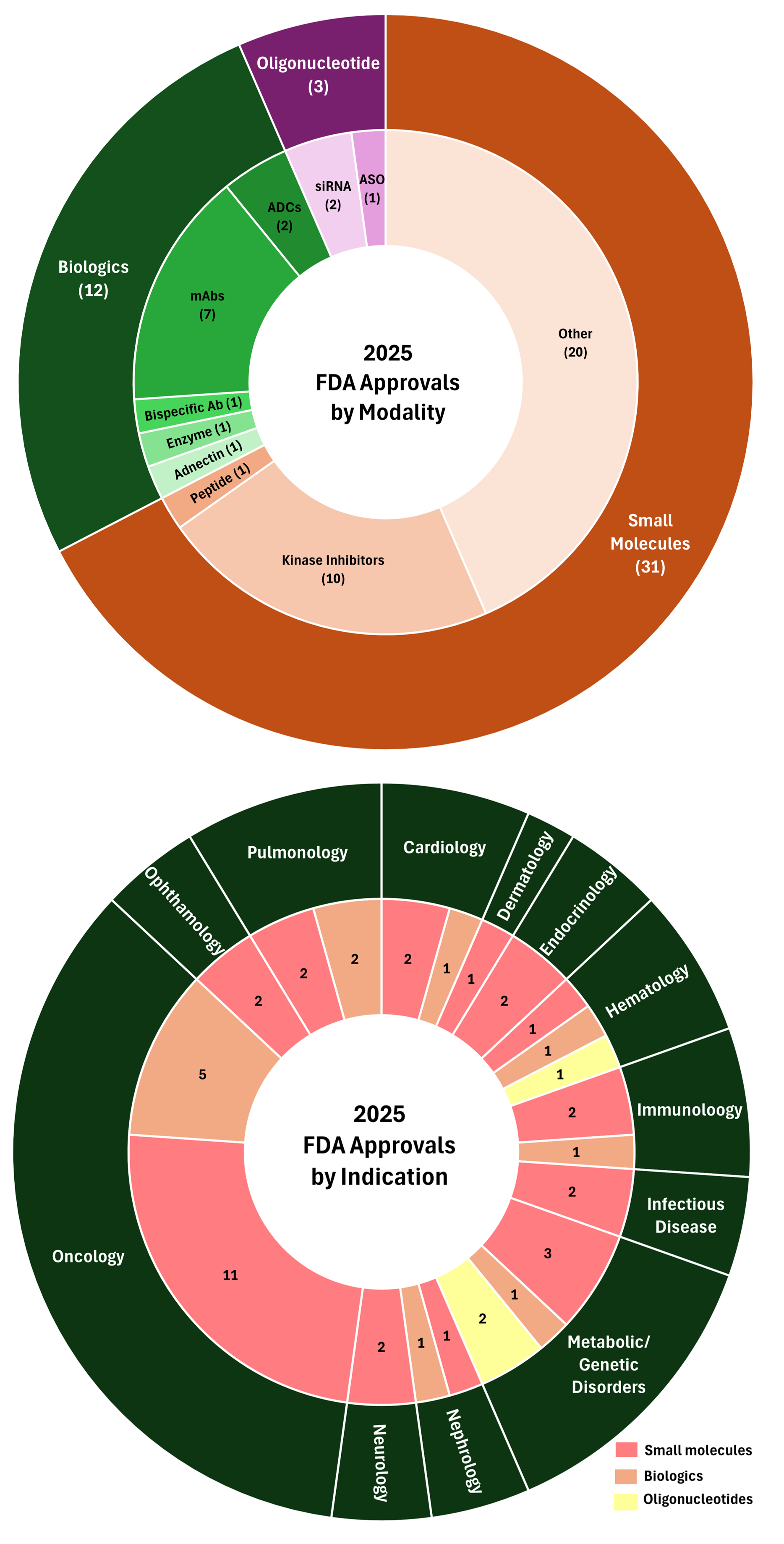
In 2025, the FDA's Center for Drug Evaluation and Research (CDER) oversaw the approval of 46 new therapeutic agents, including 31 small molecules, 12 biologics and 3 oligonucleotides across 12 different disease areas. In this pipeline, oncology continues to represent a large proportion of all approvals (35%), notably with several new modalities targeting genetically distinct tumor subtypes. Examples that highlight the growing clinical impact of precision oncology include:
AbbVie’s telisotuzumab (Emrelis®), a first-in-class, c-Met-directed antibody-drug conjugate (ADC) targeting non-small cell lung cancer (nSCLC) with high c-Met overexpression
Dizal (Jiangsu) Pharma’s sunvozertinib (Zegfrovy®), an oral, covalent, small molecule tyrosine kinase inhibitor targeting NSCLC with EGFR exon 20 mutations
Jazz Pharmaceutical’s dordaviprone (Modeyso®), a first-in-class, CNS active, oral, small molecule CLP protease activator, which received accelerated FDA approval for the treatment of diffuse midline glioma with H3(K27M) mutations
Nuvation Bio’s taletrectinib (Ibtrozi®), an oral, CNS-penetrant, ROS1 tyrosine kinase inhibitor for the treatment of locally advanced or metastatic ROS1-positive NSCLC
Moreover, 2025 saw the rare approval of a novel combination featuring two investigational drugs not previously approved by the FDA for any indication. Verastem’s avutometinib, a small molecule RAF-MEK1 inhibitor, and defactinib, a small molecule focal adhesion kinase or FAK inhibitor (Avmapki®-Fakzynja® Co-Pack), was approved as a combination treatment for KRAS-mutated, recurrent, low-grade serous ovarian cancer. Of note, this drug combination, in conjunction with PD1 inhibitor nivolumab, is now in a phase II clinical trial at Emory's Winship Cancer Institute for the treatment of anti-PD1 refractory LKB1-mutant advanced non-small cell lung cancer (clinicaltrials.gov ID: NCT06495125).
Beyond oncology, 2025 also saw the approval of first-in-class agents in the fields of neurology, infectious disease, pulmonology, ophthalmology and rare genetic disorders. Noteworthy examples include:
Vertex’s suzetrigine (Journavx®), an oral, non-opioid, small molecule NaV1.8 inhibitor for the treatment of moderate-to-severe acute pain in adults. In light of the ongoing opioid epidemic and an urgent need for new therapies for the treatment of pain, prior to approval, suzetrigine’s new drug application was granted Priority Review by the FDA, as well as Breakthrough Therapy and Fast Track designations.
GSK’s gepotidacin (Blujepa®) and Entasis/Innoviva’s zoliflodacin (Nuzolvence®), two oral, small molecule bacterial type II topoisomerase inhibitors approved for the treatment of uncomplicated urogenital gonorrhea caused by Neisseria gonorrhoeae. These anti-infective agents function through mechanisms distinct from classical topoisomerase inhibitors such as ciproflaxin and have, so far, demonstrated little cross-resistance with several approved antibacterial classes, a significant boon amidst a global rise in antibiotic-resistance. Zoflidodacin also received Priority Review and Fast Track designations from the FDA and was granted Qualified Infectious Disease Product status under the FDA’s Generating Antibiotic Incentives Now (GAIN) initiative.
For a full summary of 2025 FDA approvals, read the Nature Reviews Drug Discovery article HERE, or visit the FDA webpage HERE.
Author: Nicole Pribut, PhD, CNM Medicinal Chemistry Lead
Upcoming Events |
SAVE THE DATE! Emory 2026 3D Symposium: Friday, April 3rd
We are thrilled to announce that the 2026 Emory 3D Symposium: The Future of Therapeutic Innovation, will take place on Friday, April 3 in the R. Randall Rollins Building on Emory's main campus. Key features of the event include:
Keynote Presentation:
Kevan Shokat, PhD, Professor, Department of Cellular and Molecular Pharmacology, UC San Francisco; Department of Chemistry, UC Berkeley; Investigator, Howard Hughes Medical Institute
Overcoming the Undruggable Nature of the Most Common Human Oncogene, K-Ras
Featured talks by industry and academic leaders in innovative therapeutic discovery:
Matt Disney, PhD, Institute Professor and Chair, Department of Chemistry, The Herbert Wertheim UF-Scripps Institute for Biomedical Research & Innovation
Ryan Potts, PhD, Vice President, Research (Induced Proximity Platform) at Amgen
Eric Sundberg, PhD, Professor and Chair, Department of Biochemistry, Emory University School of Medicine
Chrystal Paulos, PhD, David H. Lawson Professor in Cancer Research, Professor, Department of Surgery and Microbiology & Immunology, Emory University School of Medicine
Panel discussion on The Future of Therapeutic Innovation in Atlanta, moderated by Justin Burns, PhD, Chief Innovation Officer and Vice President of the Georgia Research Alliance.
Registration will open on Monday, February 16th. Stay tuned for details!
CNM Therapeutic Advancement Computional Working Group
The CNM Therapeutic Advancement Computational Working Group is a monthly meeting that serves as a platform for Emory researchers to (a) LEARN about cutting-edge computational approaches and tools for therapeutic discovery and development and (b) CONNECT with fellow researchers at Emory working in this area.
Our next session will take place on Thursday, February 19th. Stay tuned for more details!
2026 Schrödinger License: Now Available |

The Biological Discovery through Chemical Innovation (BDCI) initiative is pleased to Provide the 2026 Emory site license for the Schrödinger computational suite (including PyMol). "Schrödinger's computational platform, powered by physics, is transforming the way therapeutics and materials are discovered to make innovations of the future achievable, today." Thanks to the unified support from BDCI, we are able to offer an open access model to Schrödinger (including PyMOL) to anyone at Emory.
Additional points:
New to the license this year: WaterMap for all! WaterMap is a "state-of-the-art, structure-based method for assessing the energetics of water-solvating ligand binding sites for ligand optimization."
Also part of our license: 200 open seats for select Schrödinger Online Courses (SOCs). These immersive, self-paced courses developed by the Schrödinger educational team typically cost hundreds of dollars, so please make good use of this valuable resource! Courses covered include:
Introduction to Molecular Modeling in Drug Discovery
Introduction to Computational Antibody Engineering
Pharmaceutical Formulations
Homogeneous Catalysis and Reactivity
Designing Quality Ligand Libraries
Target Enablement, Preparation, and Validation
Virtual Screening with Integrated Physics & Machine Learning
If you’re interested in accessing these tools, reach out to bdci@emory.edu.
Request for Proposals |
NINDS IGNITE Program: Assay Development and Neurotherapeutic Agent Identification (R61/R33)
The NIH Innovation Grants to Nurture Initial Translational Efforts (IGNITE), through the National Institute for Neurological Disorders and Stroke (NINDS) serves as a feeder program to help position early translational research in neurotherapeutics (small molecules or biologics) for later-stage development funding programs.
This particular funding opportunity (R61/R33 - IGNITE: Assay Development and Neurotherapeutic Agent Identification) is looking to support the development of in vitro, ex vivo or in vivo assays and conduct iterative screening efforts to identify and characterize potential therapeutic agents for neurological or neuromuscular disorders.
The next application due dates for this award in 2026 are:
- Wednesday, February 18th
- Thursday, June 18th
- Tuesday, October 20th
For more information click HERE
Did you know? CNM can help with your drug discovery grant proposals! Reach out to us to learn more and get started today.
Trainee Events and Highlights |
SAVE THE DATE! BDCI T32 Symposium: Thursday, April 2nd
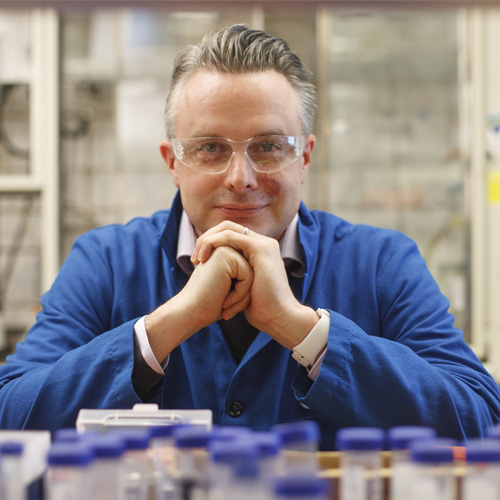
Matt Disney PhD, Institute Professor & Chair, Department of Chemistry,The Herbert Wertheim UF-Scripps Institute for Biomedical Research & Innovation
The Biological Discovery through Chemical Innovation (BDCI) T32 program is hosting the inaugural BDCI Trainee Symposium on Thursday, April 2nd. With the theme of Drugging the Undruggable, the T32 Spring Symposium is a natural doorstep to the Emory 3D Symposium (on 4/3; see above) and will feature:
Keynote presentation by Matt Disney PhD, Institute Professor and Chair, Department of Chemistry, The Herbert Wertheim UF-Scripps Institute for Biomedical Research & Innovation
Career Development Panel featuring professionals from different industries to help trainees understand different career paths, network and gain industry insights
Series of scientific talks by Emory trainees across the interface of chemistry, biology, and human health
Interdisciplinary poster session for Emory trainees
Registration will open on Monday, February 16th. Stay tuned for details!
Want to submit an event or announcement in this Newsletter? Email us at newmedicines@emory.edu to get started! |

The Emory Center for New Medicines is thankful for support from the Woodruff Health Sciences Center, Winship Cancer Institute, Emory University School of Medicine, and the Office of Technology Transfer, and enthusiastic engagement from the drug discovery community at Emory.