CONTINUUM

August 2026
We are thrilled to present the August issue of CNM's monthly newsletter, CONTINUUM! Drug discovery is an iterative, integrated continuum of activities ranging from target identification and validation to lead optimization, preclinical, and clinical testing. This approach merges chemistry, biology, and medicine with technologies like AI to accelerate discovery and improve success rates from bench to bedside. CNM exists to support and enable Emory researchers and clinicians to achieve their translational goals across this continuum - we look forward to working with you! Email us any time at newmedicines@emory.edu.
In this issue (click to jump to sections):
💡 View From the Top: A Perspective from George Painter
📢 APPLICATIONS OPEN: 2027 CNM Therapeutic Advancement Awards!
🦎 Of Monsters and Medicine: The Evolution of GLP-1R Agonists
🧑🔬 Industry Therapeutic Pipeline Updates
✉️ Contact Us
View from the Top |
In light of the growing need for pandemic preparedness, highlighted most recently by the hantavirus and Ebola outbreaks, we invited Dr. George Painter, Distinguished Professor of Pharmacology and Chemical Biology in the Emory University School of Medicine, Director of the Emory Institute of Drug Development (EIDD), and CEO of Drug Innovation Ventures at Emory (DRIVE) to share his insights on the ways that Emory has, and continues to, discover and develop novel anti-virals to treat emerging epidemics around the world.
DRIVE/EIDD: Focused on the Discovery and Development of Medical Countermeasures for Emerging RNA Viral DiseasesIn 2005, the World Health Organization proposed the term Public Health Emergency of International Concern (PHEIC) to describe a disease outbreak that has the potential to spread internationally and become a public health issue requiring international coordination of response. |
|

Since its implementation in 2007, there have been nine PHEIC declarations covering eight disease outbreaks. Each of these outbreaks have a viral etiology, with seven stemming from multiple families of RNA viruses and two caused by the same double stranded DNA virus (monkeypox virus, now Mpox). In 2012, when we formed DRug Innovation Ventures at Emory (DRIVE), multiple RNA viruses were identified on the US Select Agent and CDC Notifiable Diseases lists as having the potential to cause significant morbidity and mortality. By 2013, a total of 180 zoonotic RNA viruses had been identified as capable of infecting and causing disease in humans. At this time, there were almost no medical countermeasures to prevent or treat infection by most of these viruses. For this reason, DRIVE coordinated with the newly reorganized Emory Institute of Drug Development (EIDD) to focus specifically on identifying and developing small molecule antiviral agents for the prophylaxis and treatment of RNA viruses of public health concern. This continues to be our focus.
In 2013, DRIVE received a contract from the Defense Threat Reduction Agency (DTRA) to identify a direct-acting, small molecule antiviral agent to treat infection by Venezuelan Equine Encephalitis Virus (VEEV), a single-stranded positive sense RNA virus endemic to the Americas. VEEV had reportedly been weaponized during the Cold War, and in its weaponized (aerosolized) form, readily infects sensory neurons within the olfactory epithelium, providing a direct route into the brain that bypasses the blood-brain barrier. Owing to the virus’s ability to rapidly infect neurons after gaining access to the Central Nervous System (CNS), an individual exposed to aerosolized VEEV can develop a debilitating encephalitis associated with extreme morbidity and mortality within 18 hours. The need to rapidly achieve antiviral concentrations within the CNS along with the requirement for oral bioavailability dictated the Target Product Profile (TTP) of the desired drug. By 2018, we had identified an extremely potent ribonucleoside analog (EIDD-2801) that met the TTP, and by December of 2019 had prepared an IND application to the US FDA with a primary therapeutic indication of the treatment and post-exposure prophylaxis of VEEV infection. However, during development of this compound, we discovered EIDD-2801 to be broadly active against multiple phylogenetically disparate families of RNA viruses, including the b-coronaviruses, SARS and MERS.
In January of 2020 – the early days of the COVID-19 pandemic – the FDA and NIAID contacted us and helped facilitate confirmation of in vitro and in vivo activity for EIDD-2801 against the newly isolated SARS-CoV-2 virus. The results from these studies led to a resubmission of the IND for the treatment of SARS-CoV-2 infection, and development of EIDD-2801 in collaboration with Ridgeback Therapeutics and Merck. This drug, marketed as molnupiravir, received emergency use authorization in the US in 2021, and has been approved for use in over 26 countries for the treatment of mild to moderate SARS-CoV-2 infection.
Given the extremely good safety profile of the drug and its breadth of activity, efforts are currently underway to expand the use of molnupiravir to treat additional viral infections. We are currently collaborating with the National Institute of Biomedical Research in the Democratic Republic of the Congo, Ridgeback Therapeutics, and Merck to initiate a PEP (post-exposure prophylaxis) clinical trial against the newly emerged filovirus, Bundibugyo. DRIVE/EIDD has also partnered with the University of Cape Town, Africa CDC, and the International Centre for Genetic Engineering and Biotechnology to initiate Phase 1b/2 trials for molnupiravir to treat the ongoing outbreak across tropical Africa and Asia of chikungunya virus, an arthropod borne virus that can cause severe and sometimes chronic debilitating joint pain. Of note, chikungunya virus has recently spread to the Caribbean and the southern United States.
DRIVE/EIDD has two additional programs in advanced development.
We are currently developing an orally bioavailable ribonucleoside analog designated EIDD-3519 (a prodrug of EIDD-2749) for the treatment of multiple viral hemorrhagic fever viruses, under funding from DTRA and the NIAID. The primary indication will be for the treatment of Crimean-Congo hemorrhagic fever virus, with secondary indications for the filoviruses Ebola Zaire, Sudan virus, and Marburg virus (and possibly Bundibugyo). EIDD-3519 is also the most potent antiviral identified to date in animal models of Hantavirus (Andes strain) and Lassa fever virus. Additionally, in vitro activity for EIDD-3519 against Nipah virus has been confirmed. The timeline for the development of EIDD-3519 supports an IND submission in late 2027.
The EIDD has also identified a series of non-nucleoside allosteric inhibitors of the RNA-directed RNA polymerases of measles virus (of extreme interest given the current problems with vaccination) and the human parainfluenza virus 3, which can cause severe lung infections in infants and immunocompromised patients. Current efforts are on track to identify a development candidate by late Fall 2026.
-
We thank Dr. Painter for his perspective and sharing some of the context through which Emory has been instrumental in addressing critical gaps in treatment for infectious diseases around the world. We look forward to watching these programs develop towards the clinic in the coming months and years.
Now Accepting Applications! |
CNM is now accepting pre-applications for the next cohort of CNM Therapeutic Advancement Awards. These awards are uniquely designed to facilitate the rapid translation of promising, early-stage drug discovery projects at Emory. Successful projects will receive clinical guidance, access to enabling resources and expertise, project management, IP coaching, and strategic funds to drive quality asset creation and maturation (see below for details).
Click HERE to learn more and apply today!
The 2027 funding call is disease-agnostic, seeking promising (i.e. well-established disease biology and mechanistic insight) early-stage drug discovery projects, including:
Assay development and miniaturization
High-throughput screening and hit identification
Lead optimization (medicinal chemistry)
Preliminary pharmacological analyses
Through the financial and programmatic support provided, CNM aims to advance both the progression of projects towards the clinic as well as the value of their intellectual property at each stage of the pipeline. Emerging modalities will also be considered.
Application deadline: September, 15th 2026
If you have questions, or have a project you would like to discuss, please email us at newmedicines@emory.edu or click here to set up a time to meet with us.
CNM Pipeline Update |

Pictured from left to right: Mingji Dai, PhD,, Emory University; Reem Al-Ahmad, PhD, Emory University; Rajesh Khanna, PhD, University of Florida
Dai Lab advances natural product-inspired compounds as potential non-opioid treatments for chronic pain
Chronic pain affects millions of people, yet current treatments are often limited by inadequate efficacy, adverse effects, and the risk of opioid dependence. The Dai Lab is developing a new class of non-opioid analgesics inspired by veragranine A, a structurally complex natural product. The team developed a streamlined synthetic strategy and prepared veragranine A and a diverse collection of analogs to investigate how changes in molecular structure influence pain-relieving activity.
In collaboration with Dr. Rajesh Khanna’s lab at the University of Florida, whose team specializes in pain neurobiology, several lead compounds were found to modulate voltage-gated calcium channels involved in pain signaling and reduce pain-related behaviors in a preclinical model of osteoarthritis. By integrating synthetic chemistry, computational modeling, and pharmacological evaluation, this work aims to define the features required for analgesic activity and advance optimized veragranine-inspired compounds toward safer, non-addictive treatments for chronic pain.
The Evolution of GLP-1R Agonists |
 | Of Monsters and MedicineIn the early 1990s, endocrinologist Dr. John Eng made a serendipitous discovery that would go on to revolutionize the treatment of type 2 diabetes (T2D) and obesity. Inspired by reports that certain reptile venoms could cause inflammation of the pancreas, Dr. Eng set out to identify the hormones likely responsible for that effect, with particular interest in the venom of the Gila monster, a lizard native to the southwestern U.S. |
The hormone found to be responsible was exendin-4, a 39-amino acid peptide that shares high sequence homology with glucagon-like peptide-1 (GLP-1), the endogenous human incretin hormone responsible for regulating blood glucose levels. Follow-on studies revealed that exendin-4, like GLP-1, interacts with GLP-1 receptors (GLP-1Rs), activating cyclic AMP (cAMP) signaling and triggering the same downstream events (insulin release and glucagon suppression) that improve glycemic control. However, unlike GLP-1, which is rapidly degraded by the human protease DPP-4 and has a short circulating half-life (t1/2) of about 2 minutes, exendin-4 proved to be roughly 70-fold more stable, with a t1/2 of 2.4 hours. The early 2000s brought three pivotal Phase 3 clinical trials (NCT00039013, NCT00039026, NCT00035984) which established that the addition of exenatide to existing T2D therapies — such as metformin and/or a sulfonylurea (e.g., glyburide) — resulted in significant reductions in blood sugar (HbA1c) levels relative to placebo in T2D patients with poor glycemic control, despite prior therapy. These studies led to the 2005 FDA approval of the synthetic form of exendin-4, exenatide (BYETTATM), for the treatment of T2D.
As the first FDA-approved GLP-1R agonist, exenatide paved the way for a surge of interest in next-generation peptide-based GLP-1R agonists, not only in the clinic but in mainstream media. To date, six peptide-based GLP-1R agonists have been approved by the FDA for the treatment of T2D. Arguably, the most notable was the approval of semaglutide (OzempicTM) in 2017, an engineered, metabolically stable GLP-1 analog with a circulating t1/2 of 1 week. In addition to glycemic control, semaglutide activation of the GLP-1R/cAMP signaling pathway delays gastric emptying and activates neuronal pathways responsible to appetite regulation, resulting in increased satiety. Given this, it is perhaps unsurprising that an earlier Phase 3 trial found that T2D patients treated with semaglutide experienced significant weight loss relative to placebo. This was a notable finding prompting further investigation into semaglutide for weight loss specifically, as obesity is highly prevalent among T2D patients, and most legacy T2D drugs result in weight gain rather than weight loss. These observations led to the global phase 3 clinical trial called the Semaglutide Treatment Effect in People with obesity (STEP) program, which established that semaglutide resulted in substantial, sustained, and clinically relevant mean weight loss of 14.9% over 68 weeks of treatment. In 2021, just months after the results of the STEP program were published, semaglutide (marketed as WegovyTM) received regulatory approval for chronic weight management.
The approval of semaglutide for weight management sparked a media firestorm, with OzempicTM and WegovyTM on the lips of newscasters, celebrities, and influencers across the media landscape, which drove a surge in demand that quickly outpaced patient population expectations. By 2022, with many T2D patients unable to fill their prescriptions, the FDA placed semaglutide injection products on its drug shortage list, opening the door for compounding pharmacies and outsourcing facilities to produce compounded versions of semaglutide. While legal under these shortage conditions, compounded pharmaceuticals do not undergo the same stringent regulatory review for safety and efficacy as their FDA-approved counterparts, leading to unintended consequences. America’s Poison Centers report a nearly 1,500% increase in GLP-1R agonist-related overdose or side effect calls since 2019, with a sharp rise in exposures beginning in 2022, coinciding with the FDA’s shortage declaration. As an example, a 2023 case series documents two patients who accidentally self-administered 10 times the recommended dose of compounded semaglutide injectables, resulting in severe gastrointestinal (GI) symptoms lasting up to a week. The FDA declared the semaglutide shortage resolved in early 2025, following a global manufacturing campaign by Novo Nordisk that finally brought supply in line with demand.
Yet, behind the scenes of all this frenzy and fallout, researchers continued to advance the field, paving the way for the regulatory approval of oral formulations of semaglutide and, notably, the first oral, non-peptide, small molecule GLP-1R partial agonist, orforglipron.
The oral delivery of peptides has long been a challenge due to their susceptibility to degradation in the GI tract, greatly limiting their ability to permeate the intestinal lining. For semaglutide, this was overcome through coformulation with sodium N-(8-[2-hydroxybenzoyl]amino)caprylate (SNAC), which raises the local pH in the stomach to protect semaglutide from degradation and transiently fluidizes the plasma membrane of surrounding gastric cells, enabling transcellular migration of semaglutide and increasing absorption. Clinical trials in the PIONEER and OASIS programs demonstrated that oral formulations of semaglutide achieved glycemic control and weight loss outcomes comparable to the injectable formulations, leading to the FDA approval of RybelsusTM in 2019 for T2D, and the WegovyTM pill in 2025 for obesity and weight management.
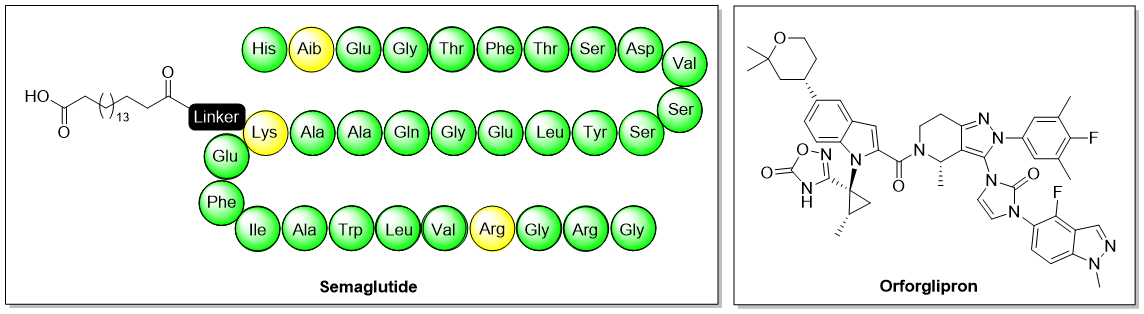
However, the bigger paradigm shift came with the FDA approval of orforglipron (FoundayoTM) for obesity in April 2026. As a small molecule GLP-1R partial agonist, orforglipron reframed the competitive landscape. From an access standpoint, small molecules are cheaper and easier to manufacture at scale relative to peptides, allowing them to reach more patients at a lower cost. However, the real distinction lies in orforglipron’s biased signaling mechanism relative to full agonist peptides like semaglutide. Semaglutide activates the GLP-1R/cAMP signaling pathway, but also recruitsβ-arrestin, a protein able to promote GLP-1R internalization, which could contribute to desensitization over time. In contrast, orforglipron is a biased partial agonist that favors cAMP signaling and largely avoids β-arrestin recruitment. Despite its partial agonism, a 72-week Phase 3 ATTAIN-1 clinical trial (NCT05869903) demonstrated that orforglipron produced substantial, clinically meaningful weight loss compared with placebo, broadly comparable to the effects observed with full agonists like semaglutide. To date, four other small molecule non-peptide GLP-1R agonists have entered clinical trials, with aleniglipron the furthest along and anticipated to enter phase 3 clinical trials later this year.
From the venom of the Gila monster to the revolutionary treatment of T2D and weight management, the story of GLP-1R agonists’ evolution clearly illustrates the power of basic research as a foundation for real-world clinical impact. Yet, interest in GLP-1R agonists continues to grow well beyond T2D and weight management, with clinical trials exploring the benefits of semaglutide for the prevention of cardiac events (NCT03574597) and advanced liver disease (NCT04822181), while preclinical studies are examining the role of GLP-1R agonists in cancer. Given the breadth of conditions these drugs now appear to touch, there are whispers throughout the medical community touting GLP-1R agonists as “miracle drugs.” It will be exciting to see how their clinical impact grows as researchers pursue these expanded indications.
Author: Nicole Pribut, PhD, Assistant Program Director, CNM
Industry Therapeutic Pipeline Updates |
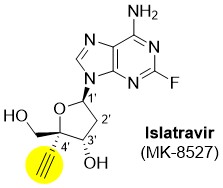 | Islatravir, a first-in-class NRTTI, receives FDA approval for HIVIn April 2026, the FDA approved islatravir (MK-8591) in combination with doravirine as Idvynso® for the treatment of HIV-1. This approval is significant, as islatrivir represents a new class of inhibitors called nucleoside reverse transcriptase translocation inhibitors (NRTTIs). |
Islatravir is structurally similar to nucleoside reverse transcriptase inhibitors (NRTIS) such as emtricitabine (FTC), an obligate chain terminator discovered by Emory researchers Dennis Liotta, Raymond Schinazi and Woo-Baeg Choi, which for decades formed the cornerstone of combination regimens for HIV treatment and prevention. However, islatravir inhibits reverse transcriptase (RT), the viral enzyme responsible for synthesizing viral DNA, through a distinct and novel mode of action. A key feature of this mechanism is an ethynyl group (highlighted in yellow in the above figure) at the 4’-position of islatravir’s ribose ring. A study led by Emory researchers Eleftherios Michailidis and Stefan Sarafianos demonstrated that, following incorporation of islatravir triphosphate into the nascent viral DNA chain, the ethynyl group results in a steric clash with RT that distorts the nascent DNA chain and hinders translocation, thereby preventing further viral DNA synthesis.
In preclinical studies and early clinical trials, islatravir also exhibited pharmacokinetic properties supporting extended-duration administration, a notable feature given the HIV field’s shift towards long-acting treatment paradigms. Despite this, IdvynsoTM was approved as a once-daily oral regimen due to the pharmacokinetic constraints of its partner drug, doravirine. However, positive results from two pivotal Phase 3 clinical trials (NCT06630286 and NCT06630299) with islatravir combined with lenacapavir as a once-weekly oral regimen suggest that this combination has the potential to become the first oral, once-weekly HIV treatment, pending regulatory approval.
Upcoming Events |

Join us for the 2026 End-of-Summer Social, presented by the BDCI and CNM!
We will provide drinks, food, and music - you bring the good vibes 😎
Date & Time: Friday, August 21st from 3-5 PM
Location: Campus Life Pavilion (716 Peavine Creek Drive)
Special Instructions: Please bring a valid ID for the bar!
Click HERE to add event to calendar!

Lace up your sneakers! CNM is building a team to take on the2026 Winship 5K and we want you to join us!
CNM 5K team members will receive a team t-shirt and bragging rights for achieving our fundraising goal 💪
The Race will take place on Saturday, October 3rd. Click HERE to learn more and join our team today!
Webinar: Understanding NIH's Unified Funding Strategy
On Friday, August 14, the NIH will host a webinar to increase awareness and understanding of the rationale, goals, and implementation of its Unified Funding Strategy, announced in August 2025. The webinar will also address common misconceptions and aims to foster stronger communication between the NIH and the broader research community.
Details for this event:
Date: 14th August, 2026
Time: 10:00 - 11:00 AM ET
Location: Online
Click HERE to learn more and register
Trainee Highlights |
Meet the new BDCI Training Program MPI, Dionna Williams!
The BDCI Training Program (BDCI TP) is an NIH-funded predoctoral T32, nested under the Chemistry-Biology Interface (CBI) program at NIGMS. The BDCI TP focuses on providing specialized training in interdisciplinary science to students working at the critical intersection of chemistry, biology, and human health, with a particular emphasis on drug discovery and development. Following the retirement of founding MPI Ellen Hess, we are proud to introduce our incoming MPI, Dionna Williams! Please read below to learn about their research, honors, and goals for the BDCI TP.

A first-generation college student, Dr. Williams (they/them) graduated Cum Laude from Hofstra University, attended the Albert Einstein College of Medicine for their graduate studies, and pursued a postdoctoral fellowship at Johns Hopkins University. Currently an Associate Professor at Emory University, Dr. Williams’ research studies the neuropharmacology and neuroimmunology of HIV. Dr. Williams’ lab is identifying mechanisms by which HIV antiretroviral therapies cross the blood-brain barrier, the capacity for the brain as a drug metabolizing organ, and the impact of substance use on neuroinflammation and drug: drug interactions with antiretroviral therapies. Additionally, Dr. Williams’ group is evaluating whether cannabinoids can be used to modulate immune responses to HIV and preserve neurologic health.
Dr. Williams has received prestigious awards, including NIH's K99/R00 Pathway to Independence Award and the Presidential Early Career Award for Scientists and Engineers, which recognizes early career researchers with exceptional potential for leadership. Dr. Williams has firsthand knowledge of the positive impact a T32 program can have on a trainees’ trajectory from their own experiences participating in the Geographic Medicine and Emerging Infections T32 as a PhD student. To this end, Dr. Williams is passionate about supporting trainees in their scientific journeys, providing professional development and career support as they navigate graduate school, and is dedicated to interdisciplinary science that works at the interface of chemistry and biology to identify new therapeutic approaches. It is Dr. Williams’ goal that students supported by the T32, as well as all Emory trainees who participate in BDCI training activities, are equipped to discuss their science to a broad audience and are prepared to serve as leaders in their chosen careers.
The BDCI TP welcomes incoming trainees, Izzy Castillo and Paige Sutter!
 | Isabella (Izzy) CastilloA rising 2nd year in Tyler Beyett's lab in the MSP graduate program, Izzy's work aims to identify and evaluate pairs of PROTAC degraders targeting mutant EGFR that exhibit selectivity and synergy, yielding new therapeutic strategies for non-small cell lung cancer driven by mutant EGFR. Originally from San Antonio, TX, Izzy earned her undergraduate degree from Trinity University. Her favorite molecule is Buckminsterfullerene and her favorite part of Atlanta is the Beltline! Outside the lab, Izzy likes to read and go running. Something you might not know about her: She is ambidextrous! |
 | Paige SutterA rising 2nd year in Simon Blakey's lab in Chemistry, Paige is working to develop new chemical methods leveraging Rhodium catalysis to incorporate fluorine into small molecules for the development of a platform of fluorine-containing drug fragments that can be rapidly and easily screened as LOCKTACs via 19F-NMR. Originally from Omaha, NE, Paige attended Rice University for her undergraduate studies. Her favorite molecule is also Buckminsterfullerene and her favorite part of Atlanta is the people and the food. Outside the lab, you can find Paige trying new restaurants with friends and watching her favorite reality TV shows! Something you might not know about her: She speaks fluent Spanish! |
Izzy and Paige will join rising 3rd years (see pictures below) Joshua Hardin (Chemistry), Tessa Larsen (BCDB), Jacki Smith (Chemistry), and Anna Staskiewicz (BCDB) to round out the current BDCI TP cohort. BDCI TP activities and programming are open to all Emory students - stay tuned for the 2026-27 lineup coming soon!

Want to submit an event or announcement in this Newsletter? Email us at newmedicines@emory.edu to get started! |

The Emory Center for New Medicines is thankful for support from the Woodruff Health Sciences Center, Winship Cancer Institute, Emory University School of Medicine, and the Office of Technology Transfer, and enthusiastic engagement from the drug discovery community at Emory.