


Emory’s Brain Organoid Hub was awarded a five-year $3.8 million grant from the National Institute of Mental Health, part of the National Institutes of Health, to refine recipes for growing brain-like structures in the laboratory.
Brain organoids can model aspects of disorders such as autism spectrum disorder or ALS (amyotrophic lateral sclerosis), using cells donated by a patient with the disorder being studied. This gives researchers the ability to test drugs or other therapies on human cells, tuned to a patient’s genetics.
Full development of brain organoids can take months. So the aims of this grant are to discern early signs of whether a batch of starting material will produce high-quality results. It’s like proofing a yeast culture when starting to bake bread.
“The overall goal is to enhance reproducibility across source cell lines and across laboratories,” says Jimena Andersen, PhD, assistant professor of human genetics at Emory University School of Medicine.
Brain organoids are generated from induced pluripotent stem cells or iPSCs, which have the potential to become any type of cell in the body. iPSCs come from skin or blood cells that are reprogrammed in the laboratory. Under specific culture conditions, iPSCs can be coaxed to develop into brain cells and organize themselves into three-dimensional structures: organoids. The new NIH grant focuses on organoids resembling the cortex, but researchers have also developed formulas for generating models of other regions of the brain or the spinal cord.
“One of our objectives is to monitor the size and shape of groups of growing iPSCs and then use machine learning to ask: does their morphology predict their future ability to turn into various types of brain cells?” says Fikri Birey, PhD, assistant professor of human genetics at Emory University School of Medicine.
The grant was awarded jointly to the founders of the Brain Organoid Hub: Andersen, Birey and Steven Sloan, all affiliated with the Department of Human Genetics.
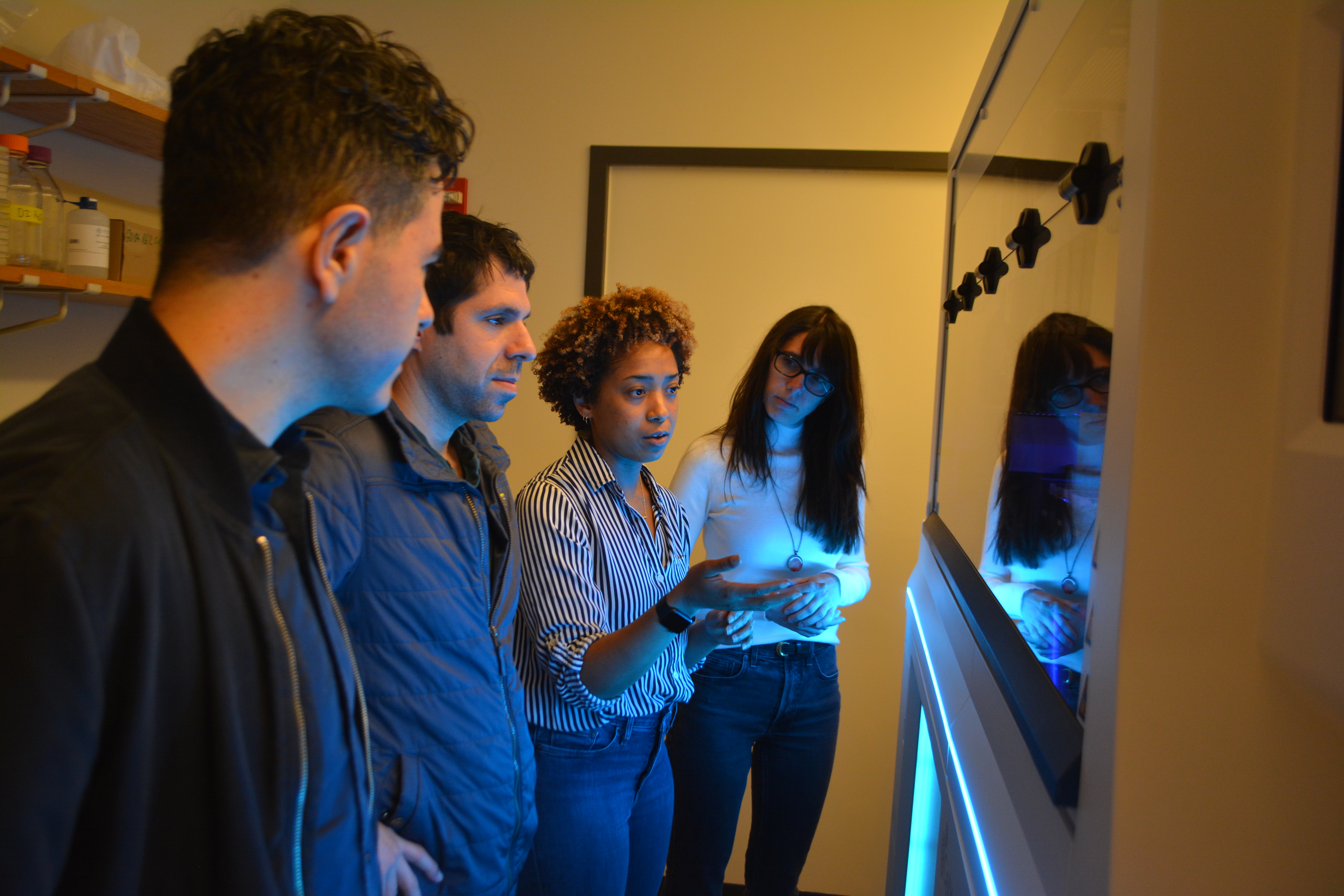
Last year, the Hub acquired and installed a CellXpress.ai automated cell culture system designed specifically for organoids, with the help of another grant from the National Institutes of Health. The system can feed and maintain cultures for weeks or months and analyze their growth patterns, all under precisely controlled conditions.
Because brain organoids are made of human cells, research centering them could both better simulate human disease and reduce the burden of animal testing. The National Institutes of Health’s Office of Research Innovation, Validation, and Application (ORIVA) has been promoting research on organoids and related approaches for reducing animal testing. Two of Birey’s graduate students, Lauren Gao and Nisan Sele, have received fellowships from the International Foundation for Ethical Research, which promotes alternatives to animal testing.